Wikimedia Commons · Public domain · Hover to magnify, click for fullscreen
Original file
About This Work
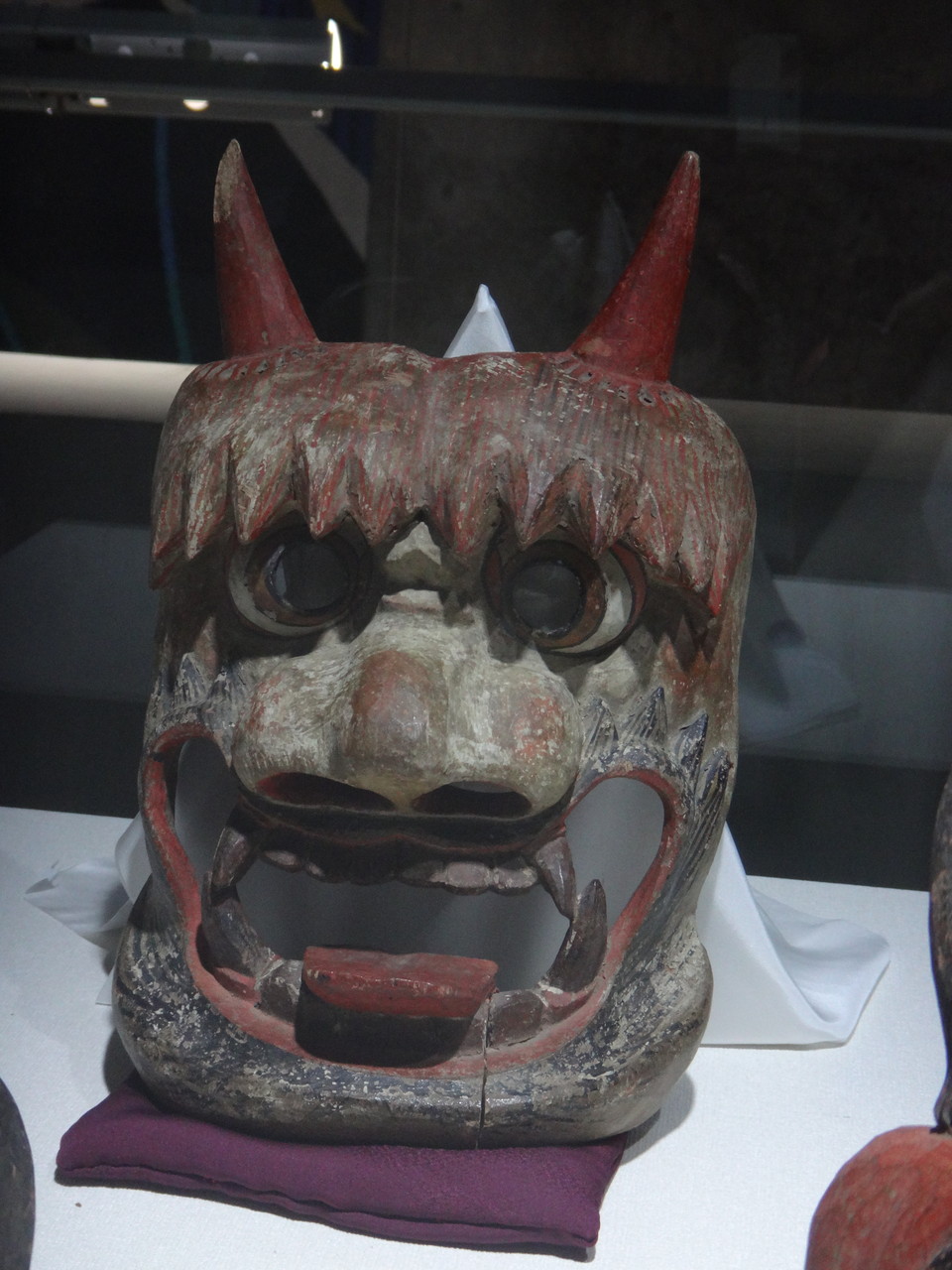
The mask features a weathered, reddish-brown finish with two prominent, pointed horns protruding from the top. It has deep, hollowed eye sockets, a wide, flat nose, and an exaggerated, gaping mouth revealing sharp, fang-like teeth and a flat, rectangular tongue. The surface shows signs of age, with cracked paint and worn pigment revealing the wood beneath. The mask is mounted on a dark purple cloth base within a museum exhibition case.
This mask represents the tradition of 'oni' (demon/ogre) iconography in Japanese folklore and Buddhism, where such figures serve as guardians or manifestations of karma and the underworld. Historically, masks of this nature were used in temple rituals, folk festivals, or local performance arts to represent supernatural entities.
Connected Texts
Japanese Buddhist demonology
The mask reflects the visual adaptation of yōkai and oni concepts into tangible objects for religious or ritual use.