Wikimedia Commons · Public domain · Hover to magnify, click for fullscreen
Original fileThe Rebis (Aurora Consurgens)
Aurora consurgens zurich 002 f-VD-2 conjoined (cropped)

About This Work
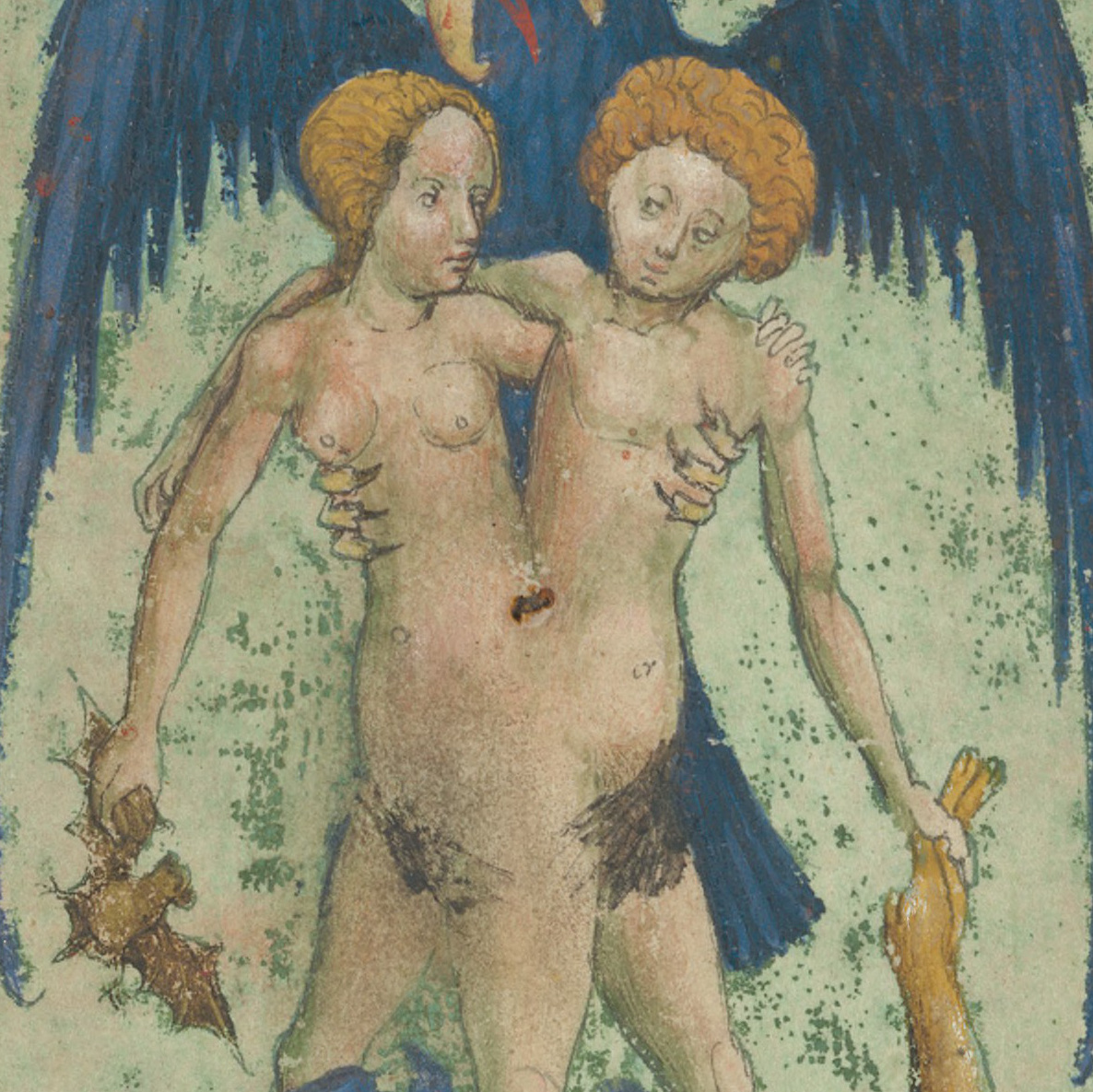
The image features a nude, conjoined hermaphroditic figure with two heads—one feminine with long hair, the other masculine with curly hair—sharing a single torso and four arms. The figures are positioned symmetrically, with their inner arms draped around each other's shoulders and their outer hands grasping external objects; the figure on the left holds a small, claw-like or root-like object, while the right figure grips a detached golden limb. They appear to be emerging from or supported by dark, blue-black feathered wings that span the upper background, set against a pale, greenish-textured field. The style is that of a medieval manuscript illumination, characterized by clear outlines, muted tones, and flattened perspective.
This illumination is a core visual component of the 'Aurora Consurgens', an alchemical treatise attributed to Thomas Aquinas. It depicts the 'Rebis' or 'Divine Hermaphrodite,' a symbol of the union of opposites—specifically, the reconciliation of Mercury (feminine/lunar) and Sulfur (masculine/solar) necessary for the completion of the Magnum Opus.