Loading...
Wikimedia Commons · Public domain · Hover to magnify, click for fullscreen
Original filemythologicalPublic domain
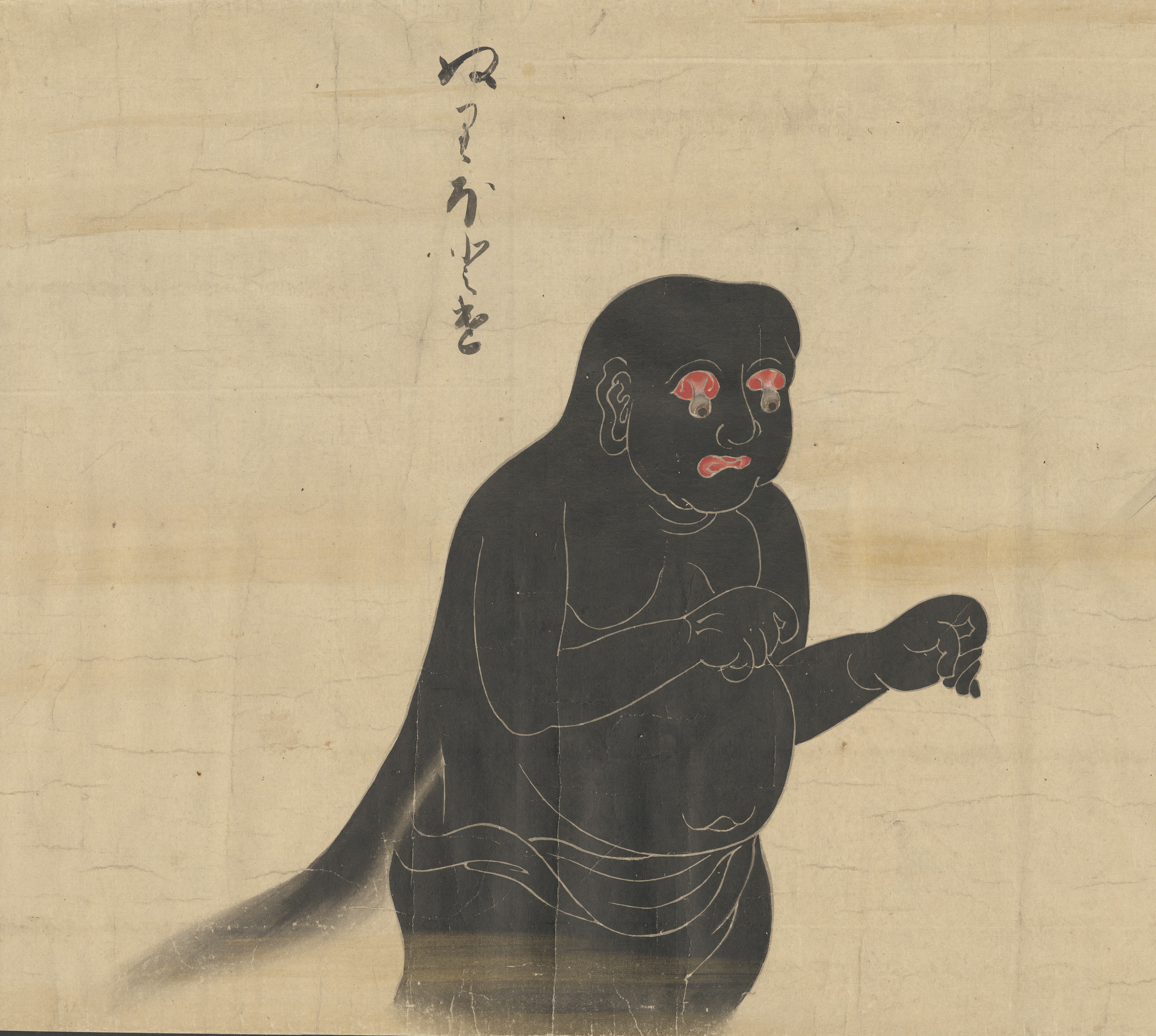
Nuribotoke (Lacquered Buddha)
17.Nuribotoke
circa 1700date QS:P,+1700-00-00T00:00:00Z/9,P1480,Q5727902

About This Work
The Nuribotoke is depicted as a heavy-set, silhouette-like figure with smooth, dark skin and a distended belly, reminiscent of a distorted Buddhist monk. Its eyes are wide and blood-red, with a matching red mouth suggesting an expression of shock or malice. The figure is shown from the waist up, appearing to emerge from a dark, hazy void at the bottom of the scroll, with its arms raised in a gesture of surprise or movement.
The Nuribotoke is a yōkai from Japanese folklore, traditionally said to be a possessed Buddhist altar (butsudan) that comes to life at night. This image belongs to the *Bakemono no e* (picture scrolls of monsters) genre, which flourished during the Edo period as a way to categorize and visualize the supernatural.
Inscriptions(Japanese)
ぬりぼとけ
Translation
Nuribotoke
Connected Texts
Bakemono no e (Picture Scrolls of Monsters)
This image is a representative example of the yōkai illustrations found in Edo-period supernatural scrolls.
Collections
Provenance & Source
Object
TechniqueAI
ink wash painting
SupportAI
paper
PeriodAI
Edo period
CultureAI
Japanese
GenreAI
mythological
Digital Source
Source
Wikimedia Commons · Public domain
Original Resolution
4544 × 4074 px
Linked Data
AI AI-cataloged fields generated by gemini-3.1-flash-lite-preview on April 21, 2026. Getty identifiers are AI-inferred and may require verification.