
Illustrations
Browse all1 images extracted from 1 books
The scientific study of fungi emerged as a distinct discipline in the sixteenth century, when Carolus Clusius published the first illustrated survey of mushrooms in his Rariorum Plantarum Historia (1601). Over the following three centuries, mycology evolved from a branch of botany into an independent science, driven by precise observation, microscopy, and the revolutionary taxonomic systems of Christiaan Hendrik Persoon and Elias Magnus Fries. This collection traces that development from Clusius through to Pier Andrea Saccardo's monumental Sylloge Fungorum, which attempted to catalogue every known fungal species.
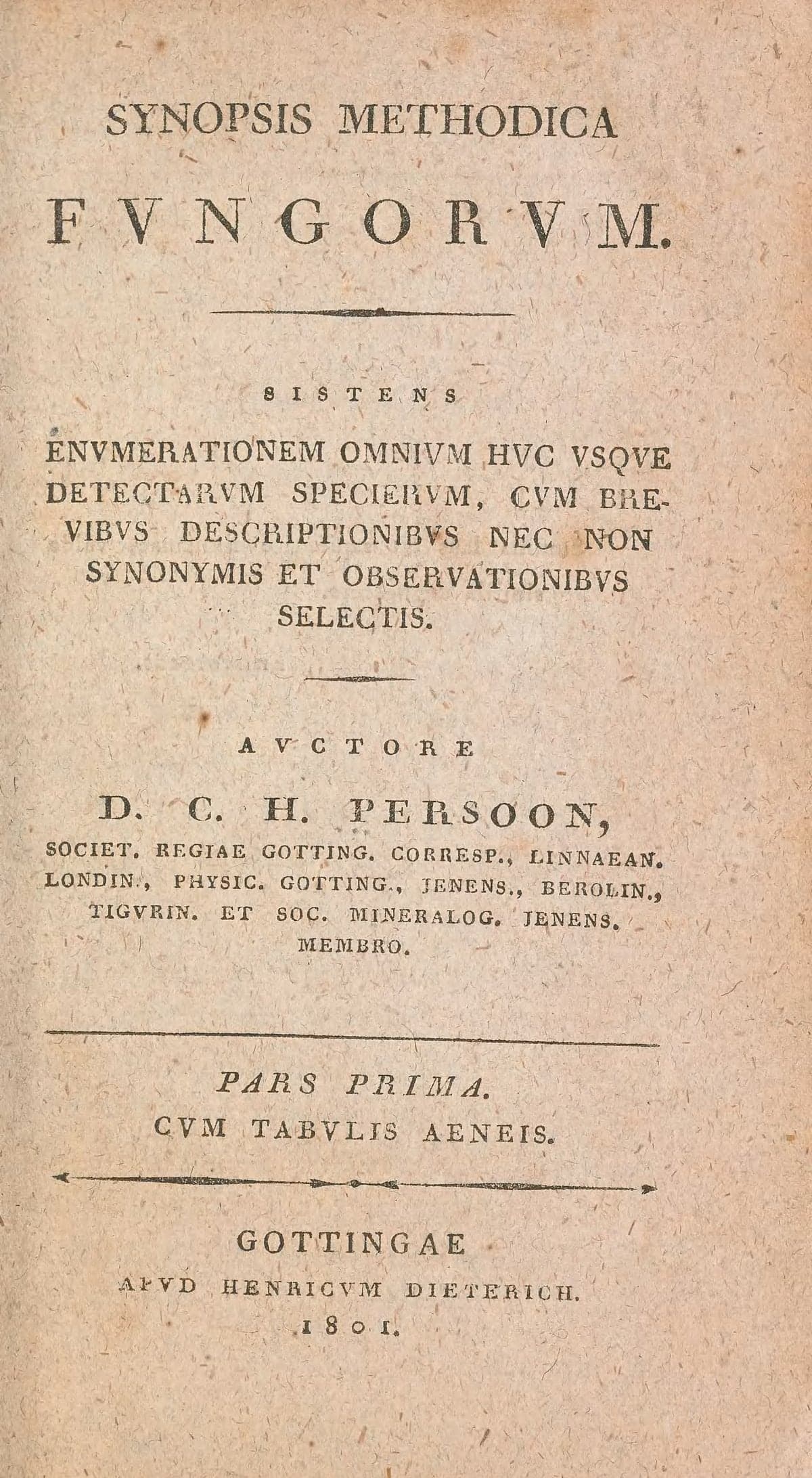
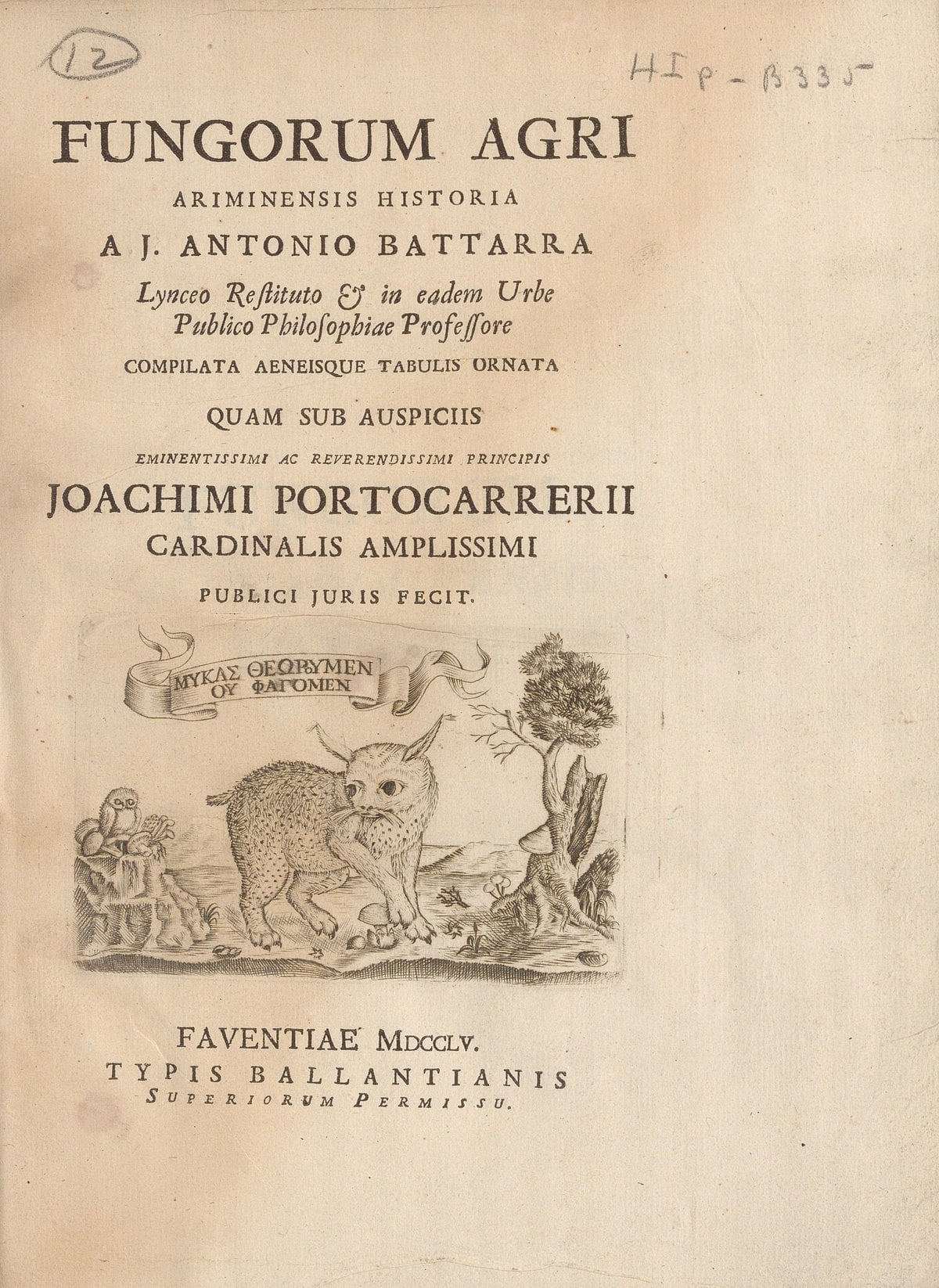
The Latin mycological tradition is particularly well represented here. Persoon's Synopsis Methodica Fungorum (1801) established the first workable classification of fungi, organizing thousands of species by the structure of their spore-bearing surfaces. Fries refined and expanded this system across three volumes of Systema Mycologicum (1821–1832), a work so authoritative that its nomenclature became the legal starting point for fungal taxonomy. Giovanni Antonio Battarra's earlier Fungorum Agri Ariminensis Historia (1755) offers a charming regional flora of the mushrooms around Rimini, while Carlo Vittadini's Monographia Tuberacearum (1831) — a first translation into English — remains the foundational scientific monograph on truffles. The French tradition is represented by Bulliard's lavishly illustrated Histoire des Champignons de la France and Paulet's practical Traité des Champignons, which includes detailed guidance on edible and poisonous species.
Essential Reading
The foundational texts of this tradition
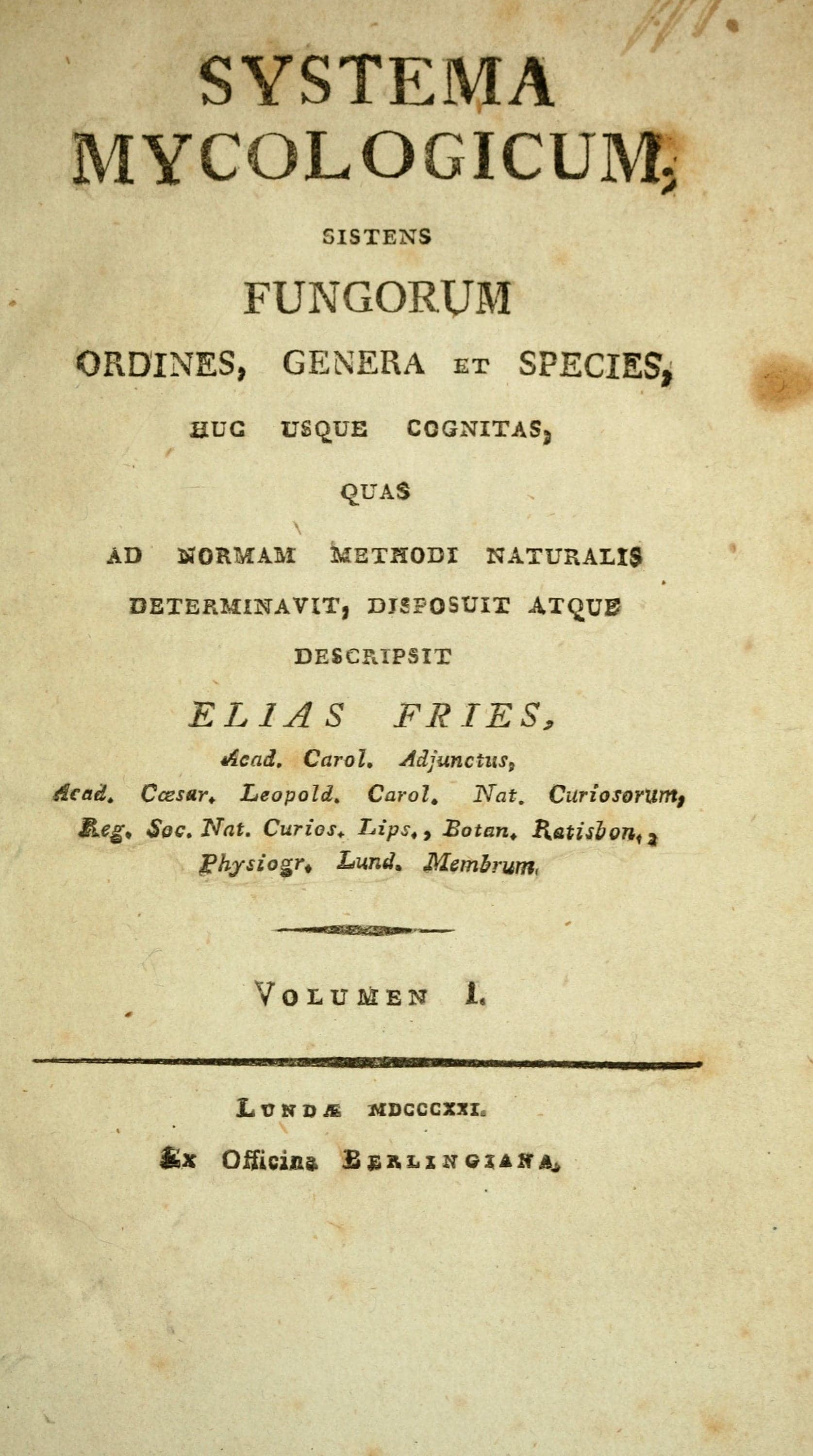
Mycological System
Elias Magnus Fries, 1821
The legal starting point for fungal nomenclature. Fries's three-volume system organized the kingdom of fungi with a rigor that held for over a century.
Rariorum Plantarum Historia (with Fungorum Historia)
Carolus Clusius, 1601
Contains the Fungorum Historia — the first illustrated survey of mushrooms, with hand-colored plates from direct observation in the forests around Vienna and Hungary.
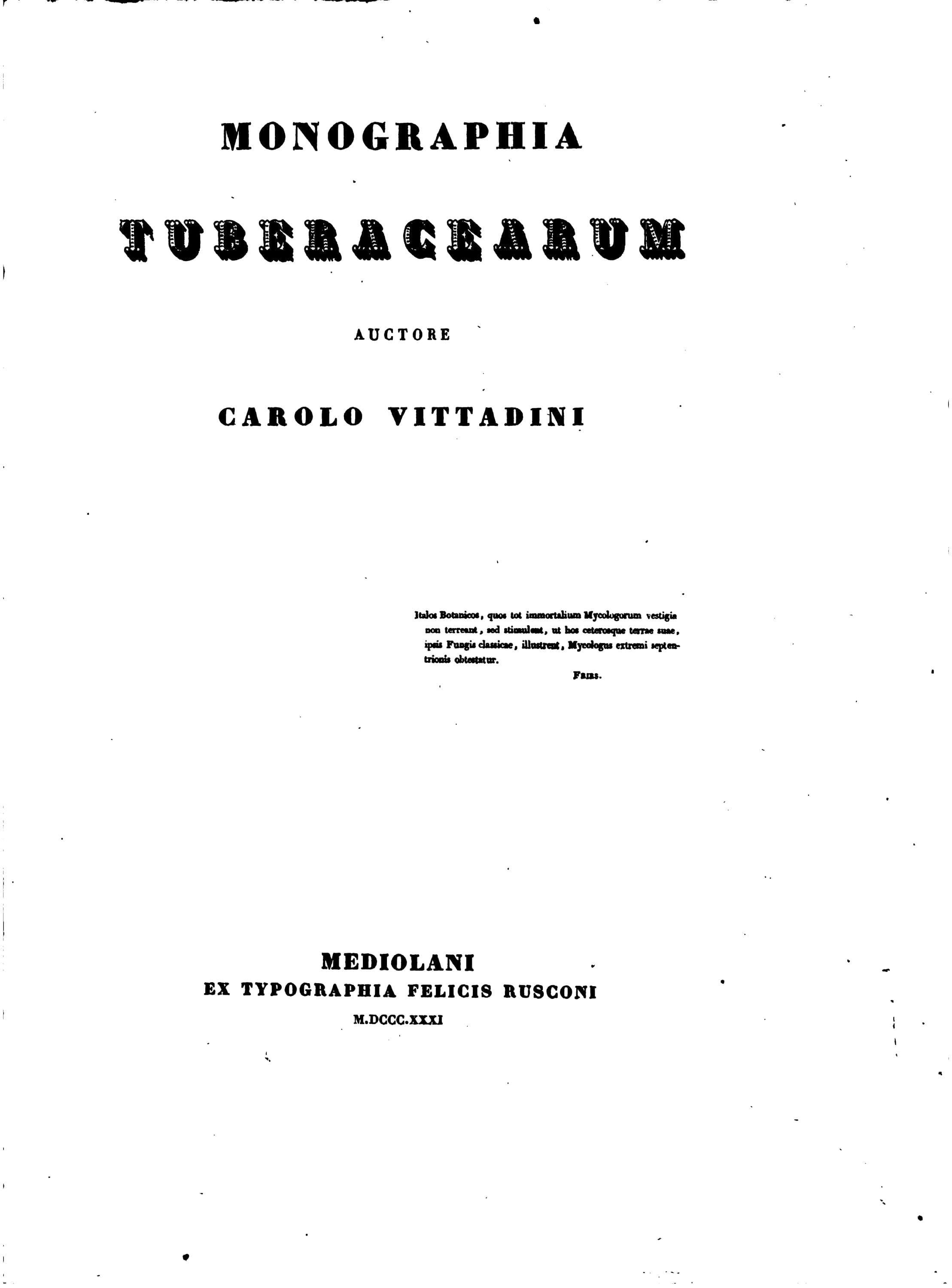
Monograph of the Truffles
Carlo Vittadini, 1831First Translation
The foundational scientific monograph on truffles, with detailed anatomical descriptions and the first systematic attempt to classify the Tuberaceae by internal structure. A first translation into English.
Important Works
Significant texts that deepen understanding
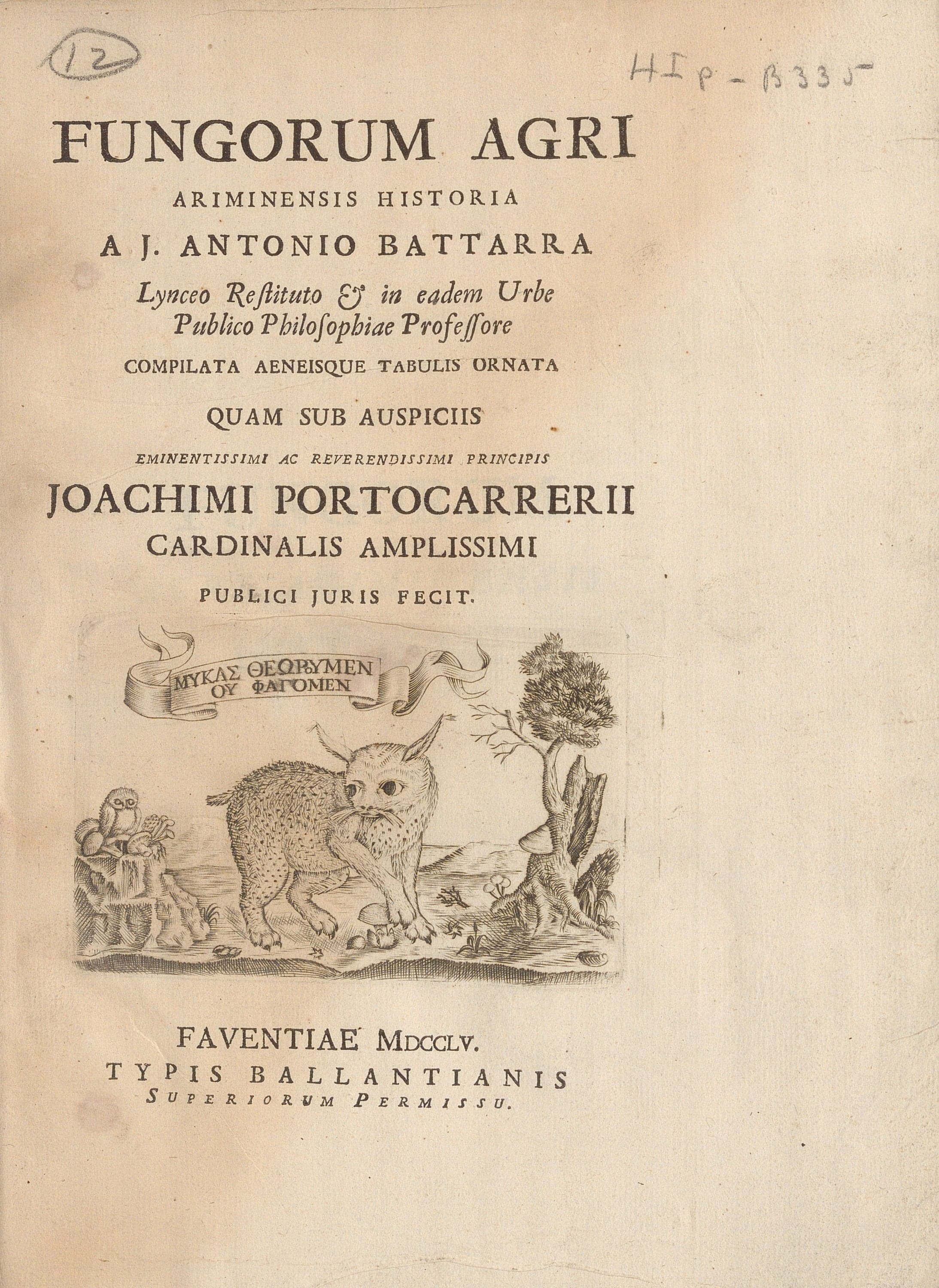
History of the Fungi of the Rimini Territory
Giovanni Antonio Battarra, 1755
A pioneering regional fungal flora documenting the mushrooms of the Rimini countryside, with fine copperplate illustrations.
Treatise on Mushrooms
Jean-Jacques Paulet, 1793
A practical French treatise on mushrooms, with detailed chapters on edible, poisonous, and medicinal species.
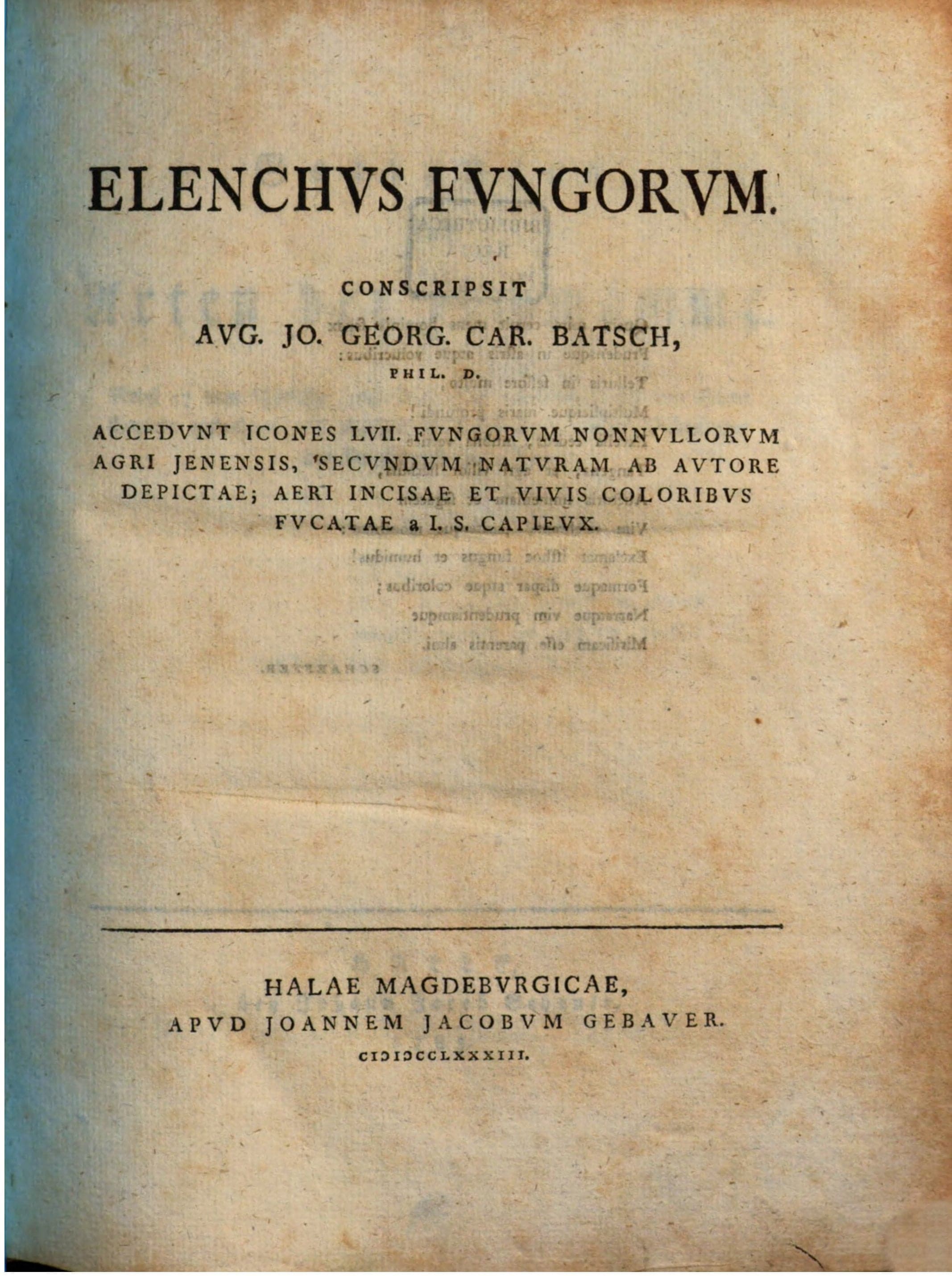
Catalogue of Fungi
August J.G.K. Batsch, 1783
Batsch's systematic enumeration of fungi, dedicated to Duke Carolus Augustus of Saxony, with careful descriptions and habitat notes.
Histoire des Champignons de la France, Vol 1
Pierre Bulliard, 1791
Bulliard's magnificently illustrated French mushroom flora, a landmark of botanical illustration.
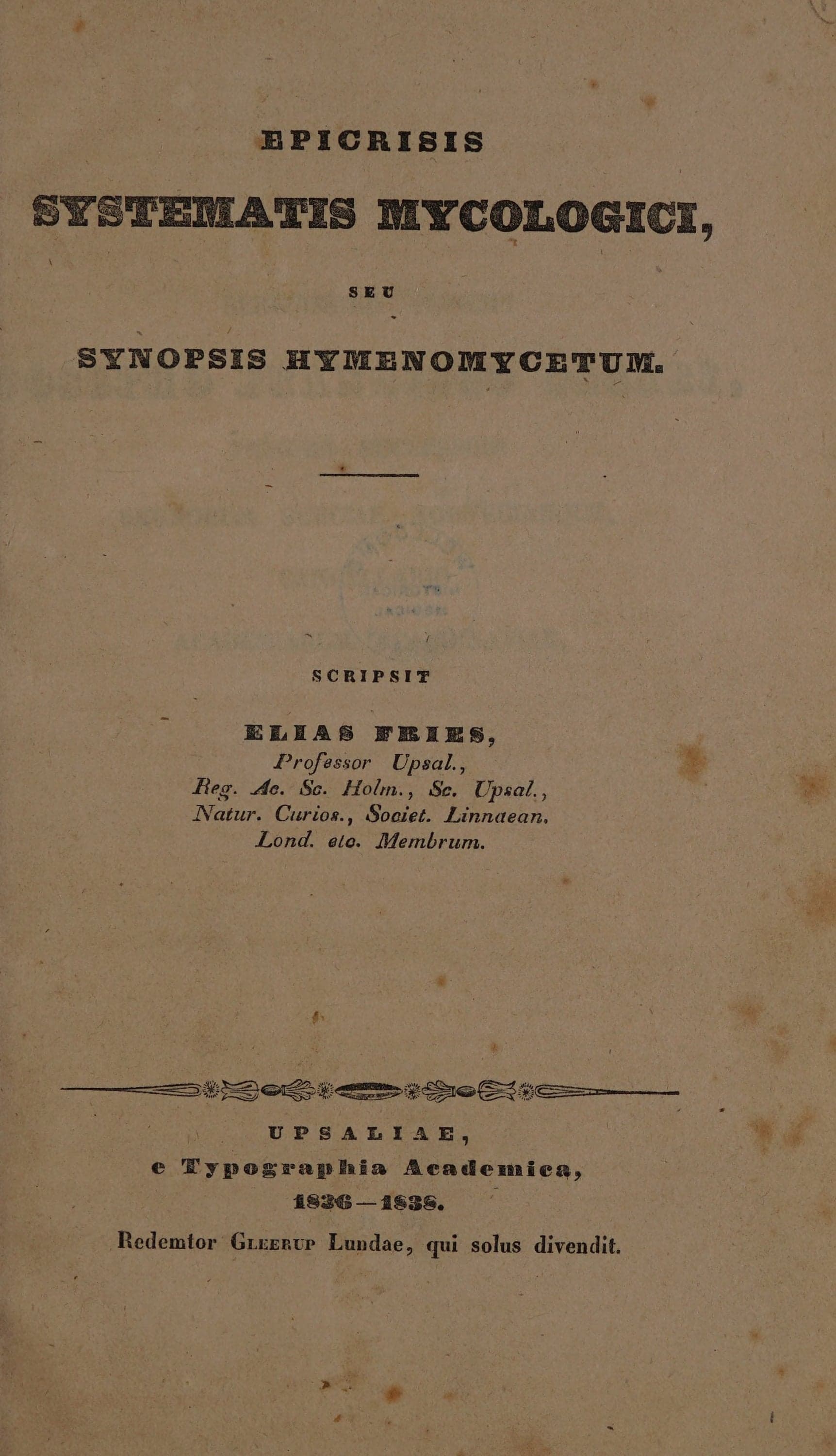
Critical Review of the Mycological System
Elias Magnus Fries, 1836
Fries's critical review of his own Systema Mycologicum, refining descriptions and incorporating two decades of new discoveries.
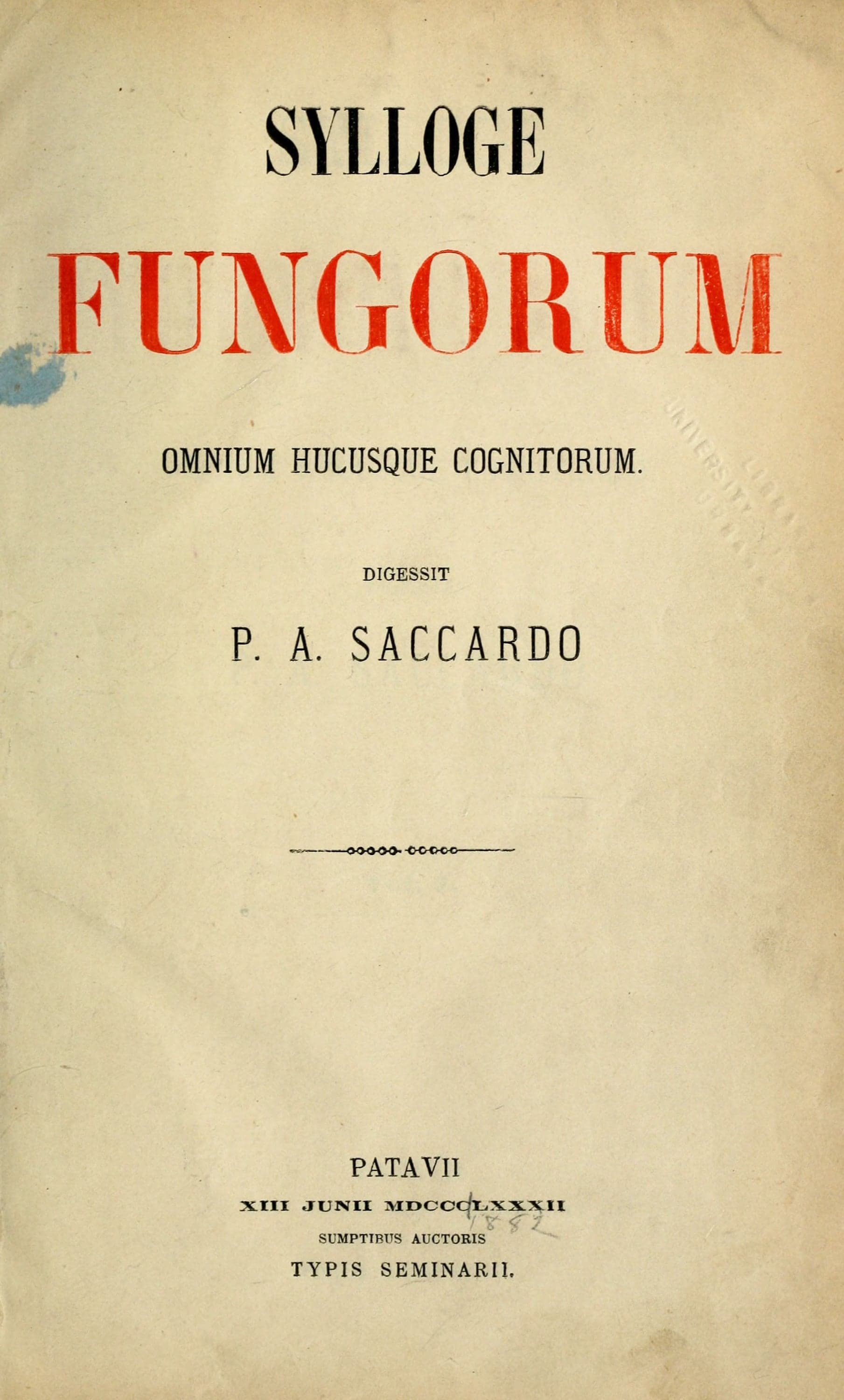
Compendium of All Fungi Known to Date
Pier Andrea Saccardo, 1882
Saccardo's attempt to catalogue every known fungal species in the world — a project so vast it eventually ran to 25 volumes.
Also Notable
European Mycology
Christiaan Hendrik Persoon, 1828
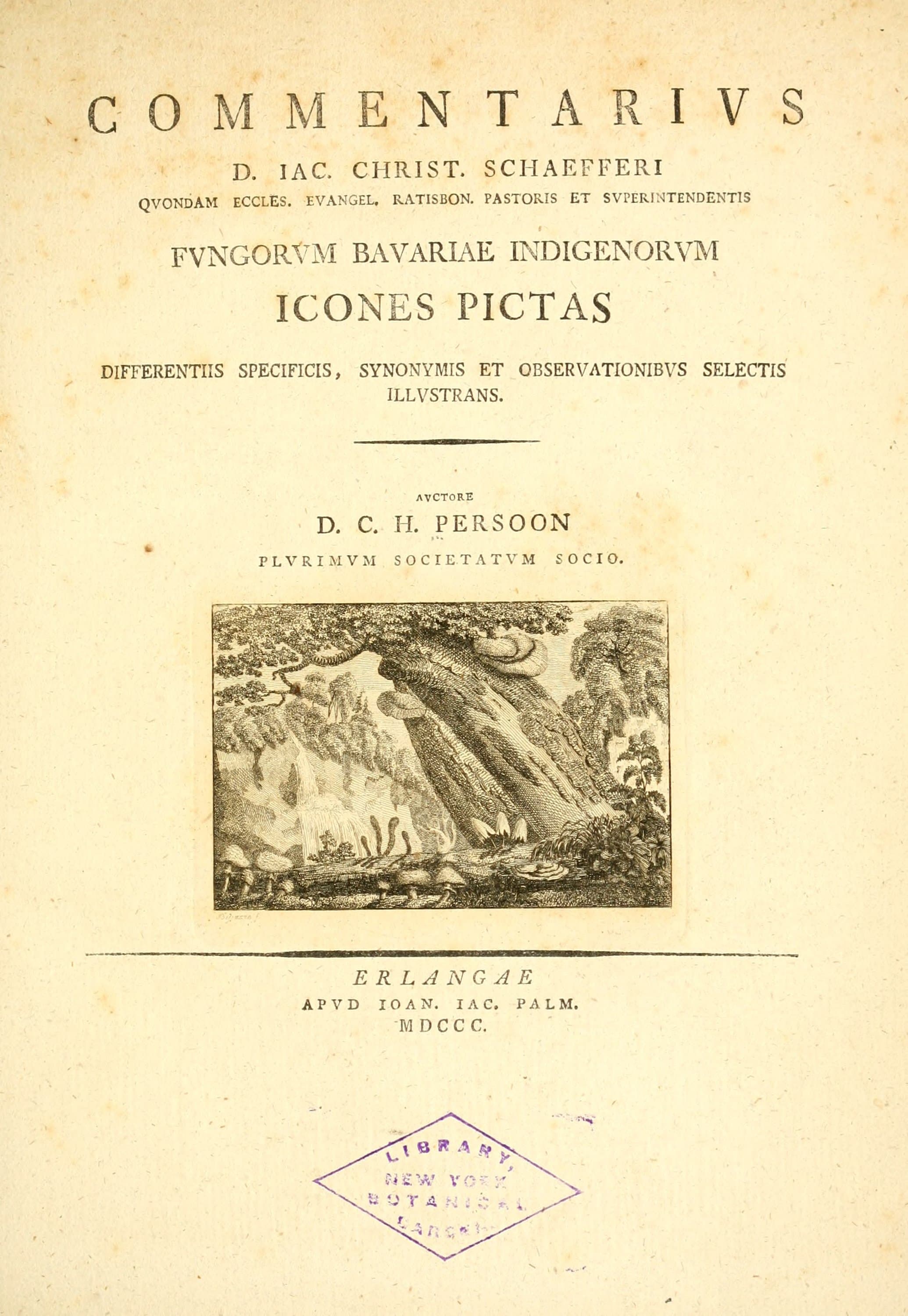
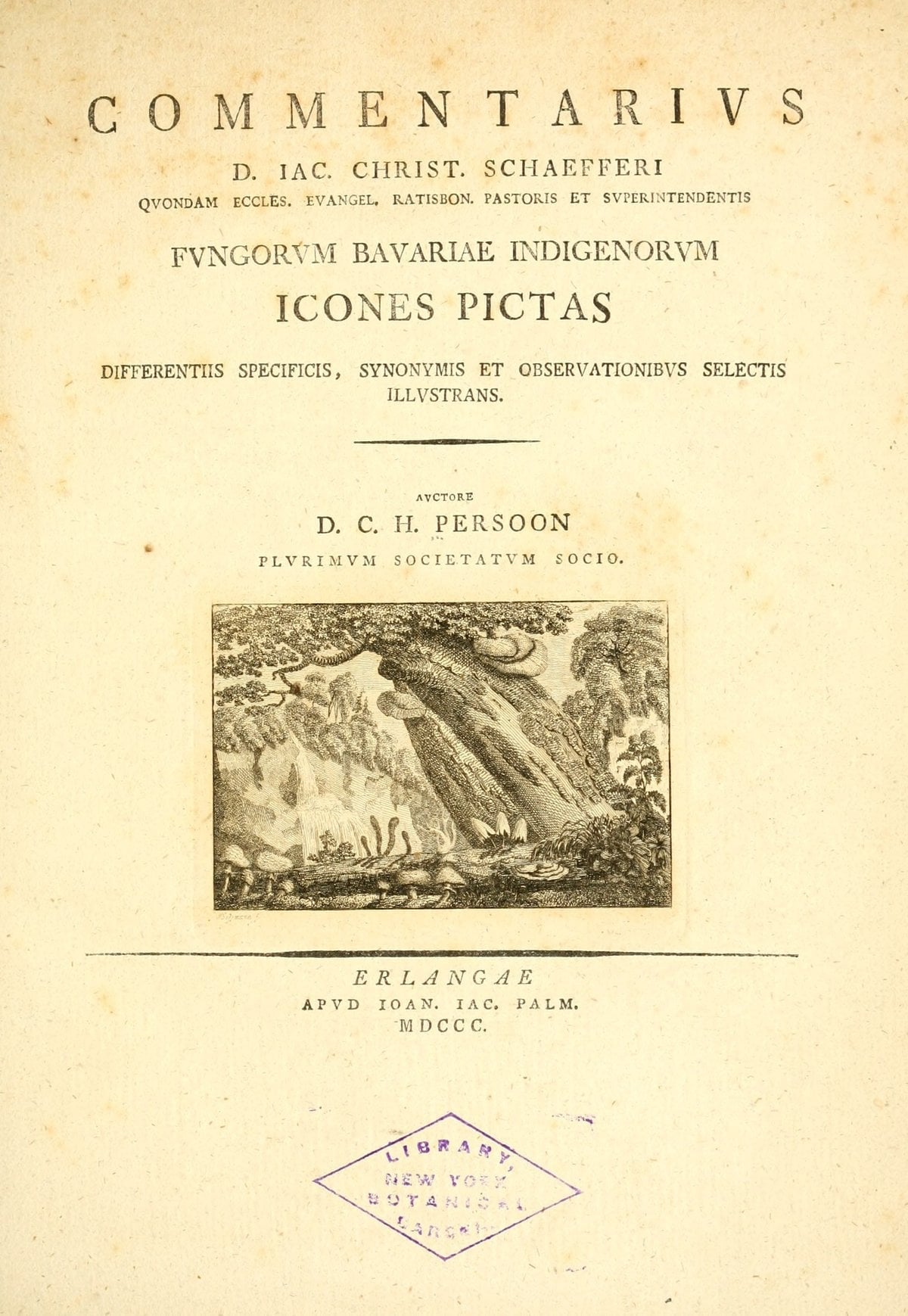
Illustrations of Fungi which Grow in Bavaria and the Palatinate around Ratisbon
Jacob Christian Schaeffer; C.H. Persoon (ed.), 1800
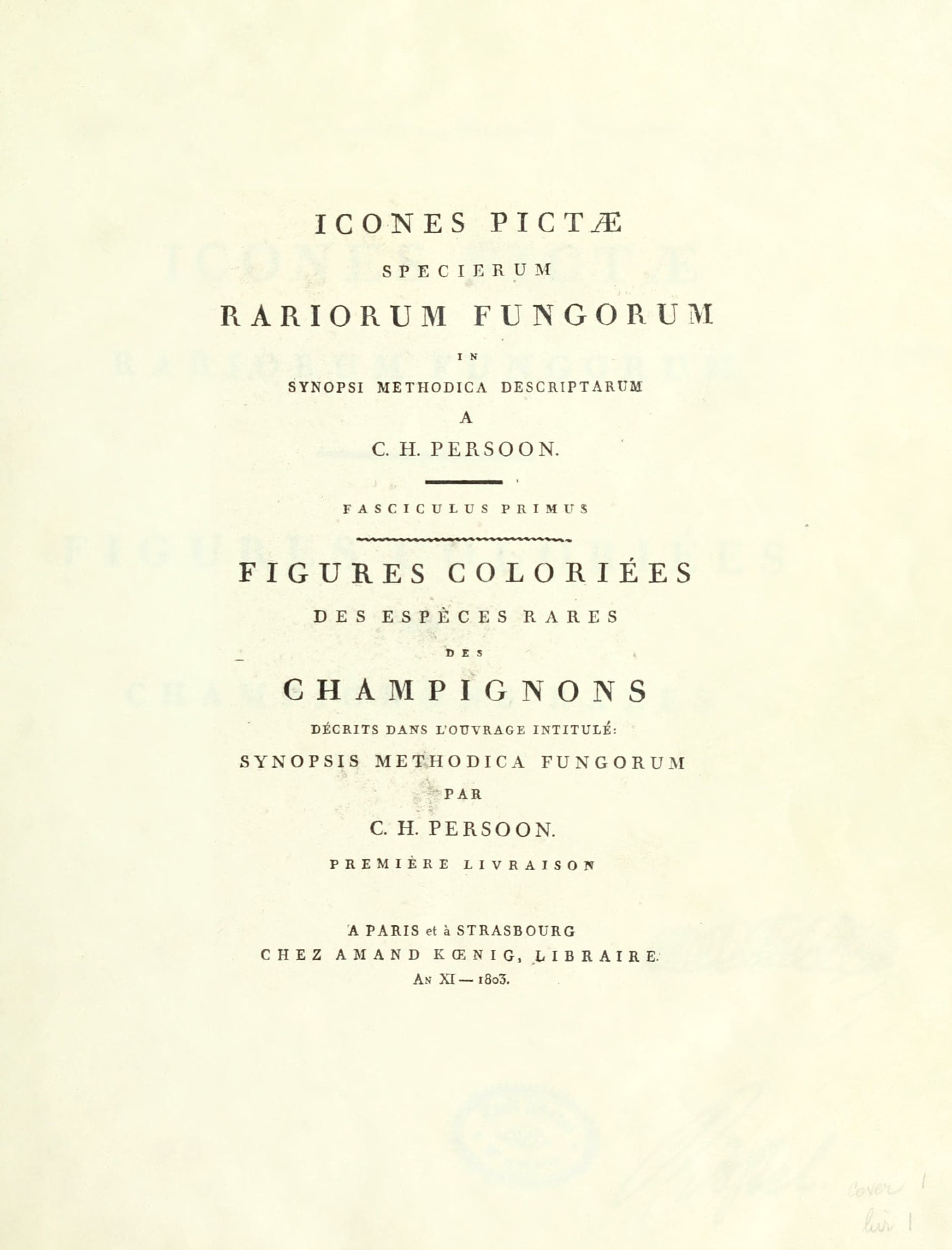
Illustrated Icons of Rare Fungi Species
Christiaan Hendrik Persoon, 1803
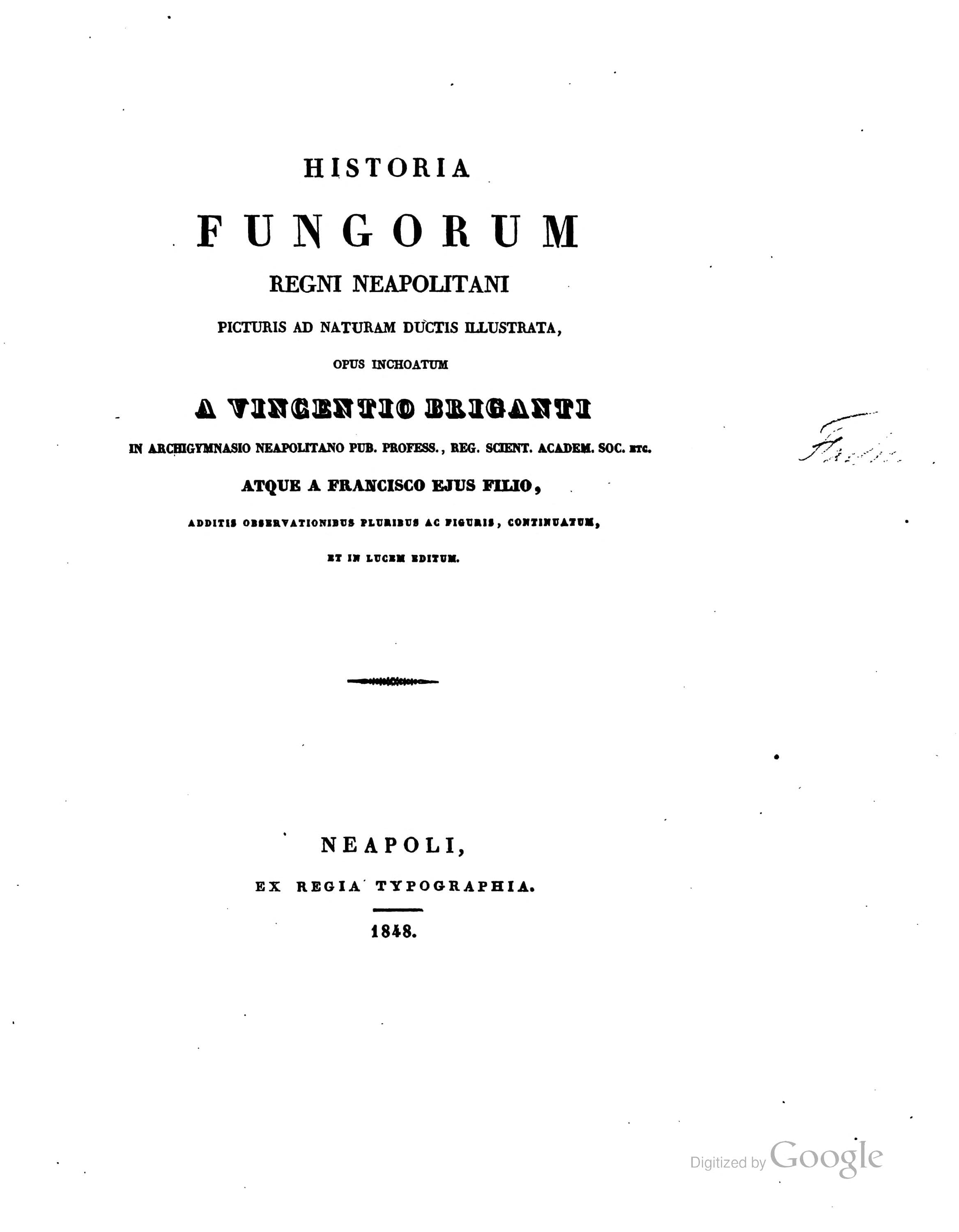
History of the Fungi of the Kingdom of Naples
Vincenzo Briganti, 1848
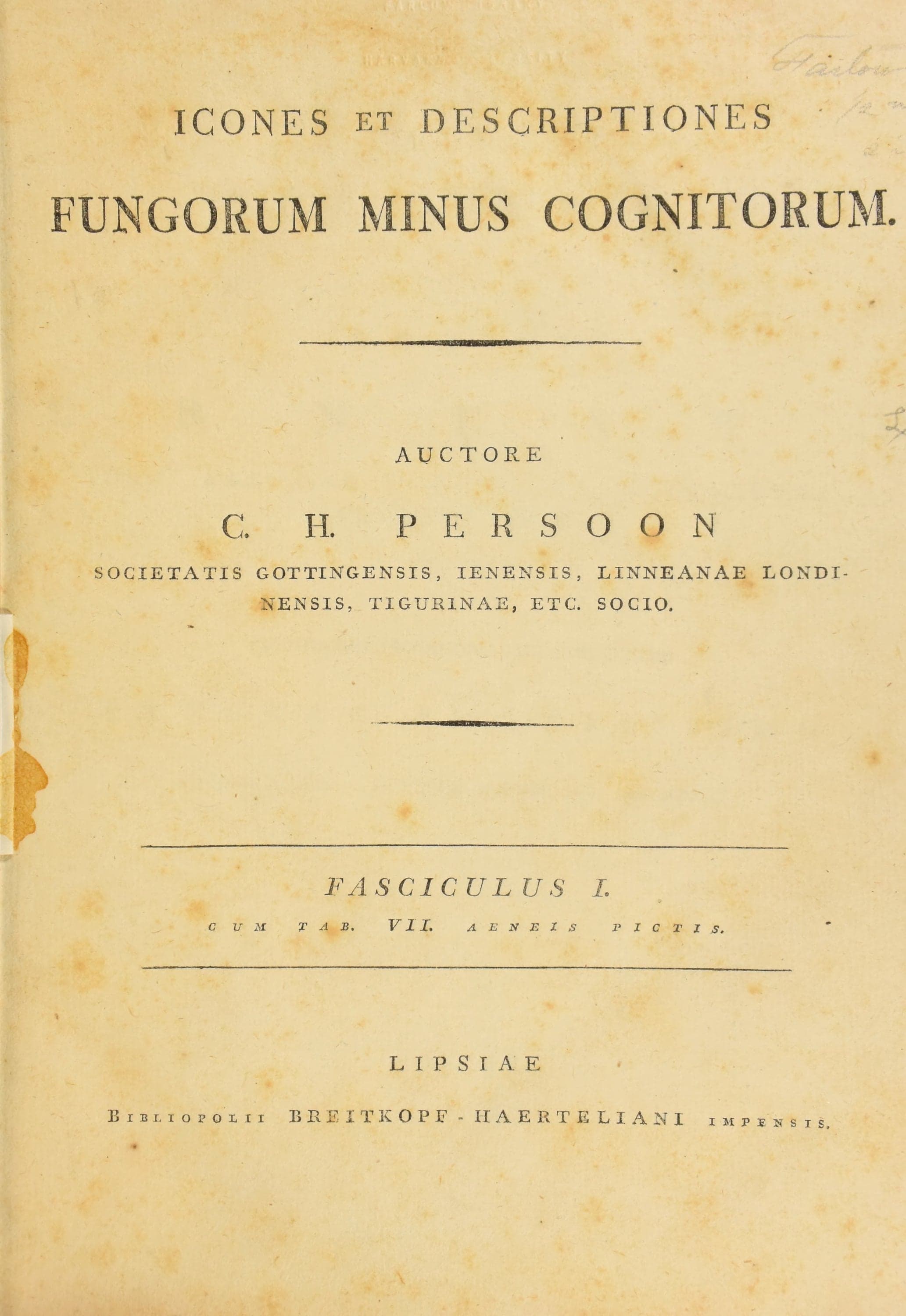
Illustrations and Descriptions of Lesser Known Fungi
Christiaan Hendrik Persoon, 1798
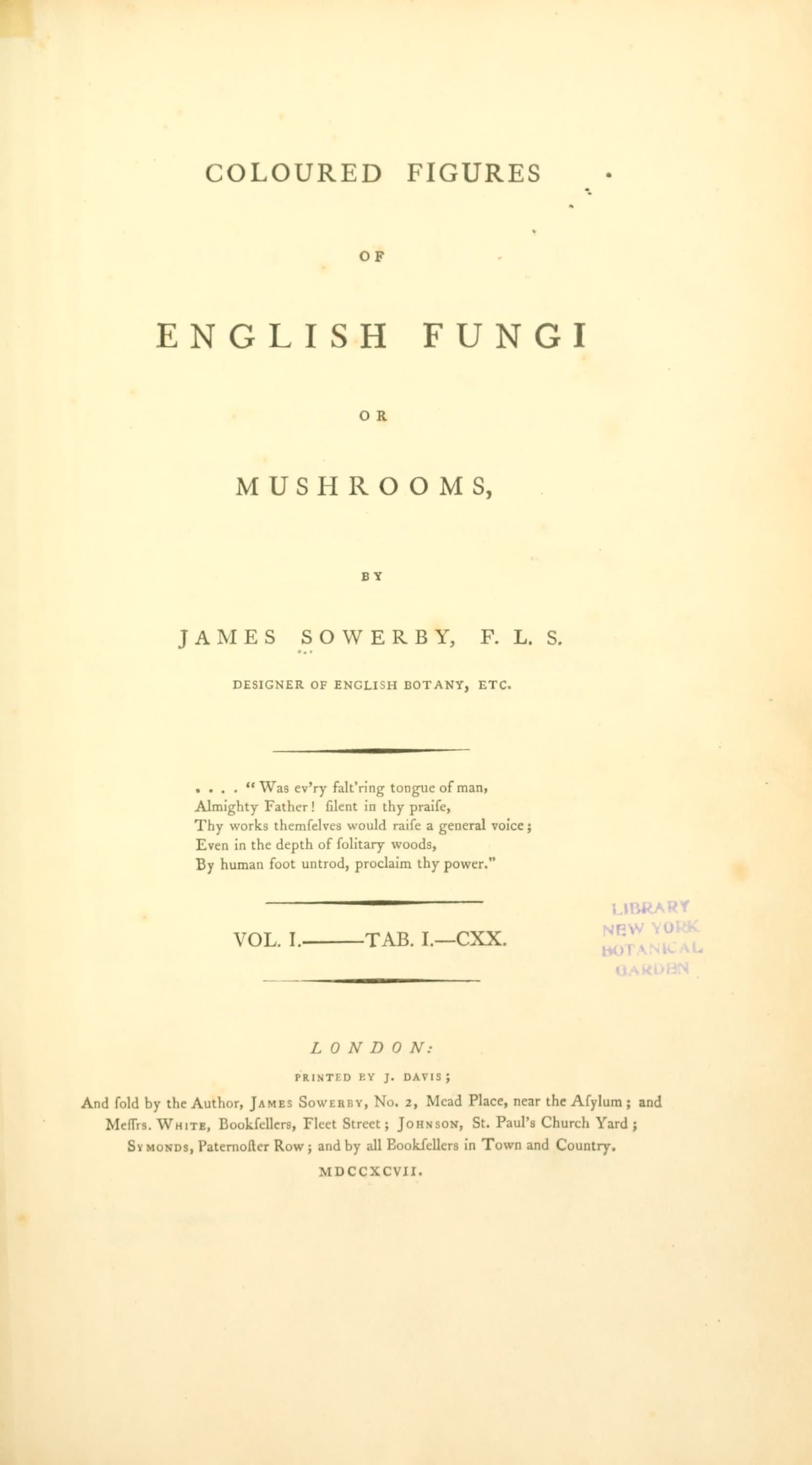
Coloured Figures of English Fungi or Mushrooms
James Sowerby, 1797
All Books
Browse Full Catalog→30 books in this collection
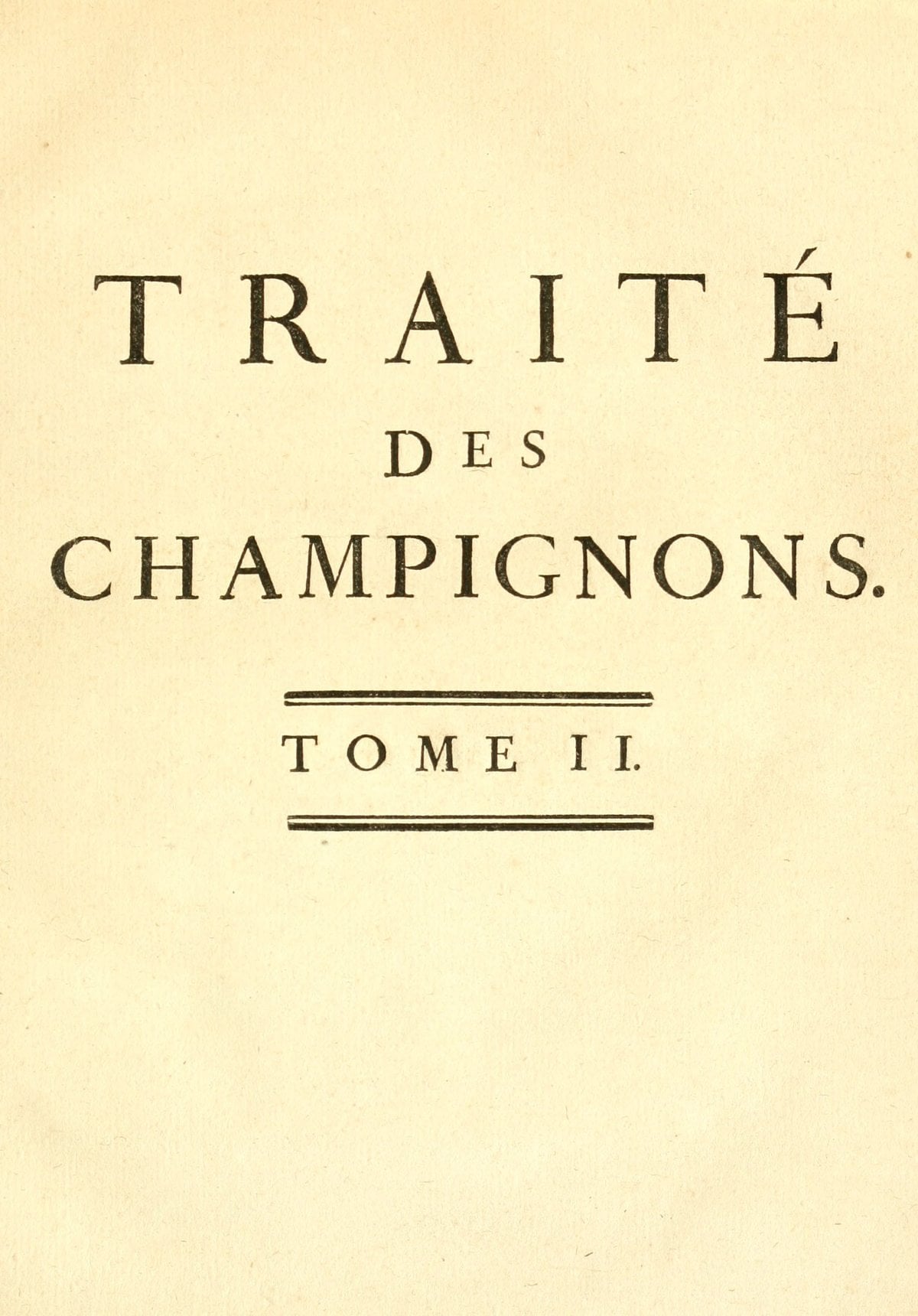
Treatise on Mushrooms
Jean-Jacques Paulet
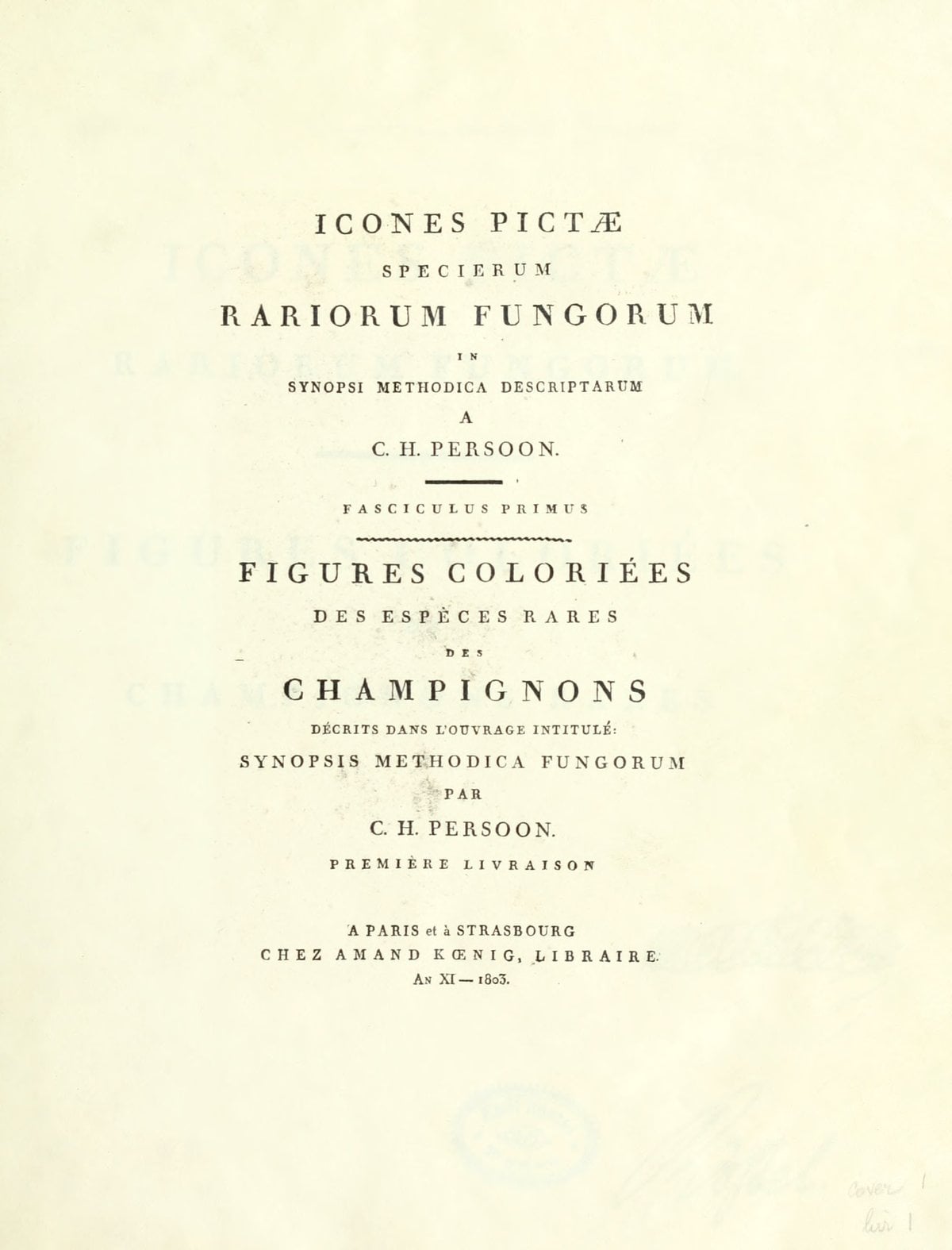
Illustrated Icons of Rare Fungi Species
Christiaan Hendrik Persoon
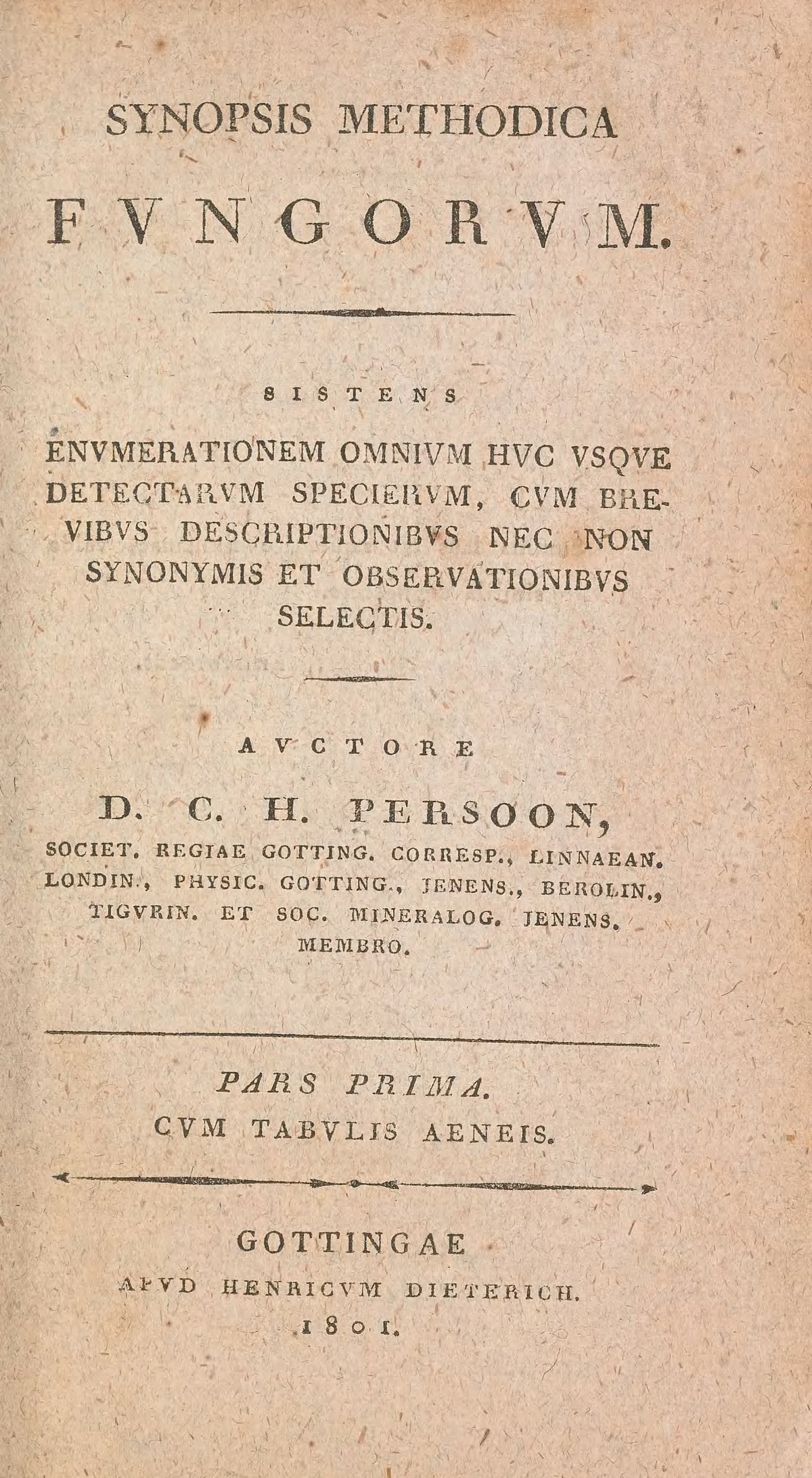
Methodical Synopsis of Fungi
Christiaan Hendrik Persoon
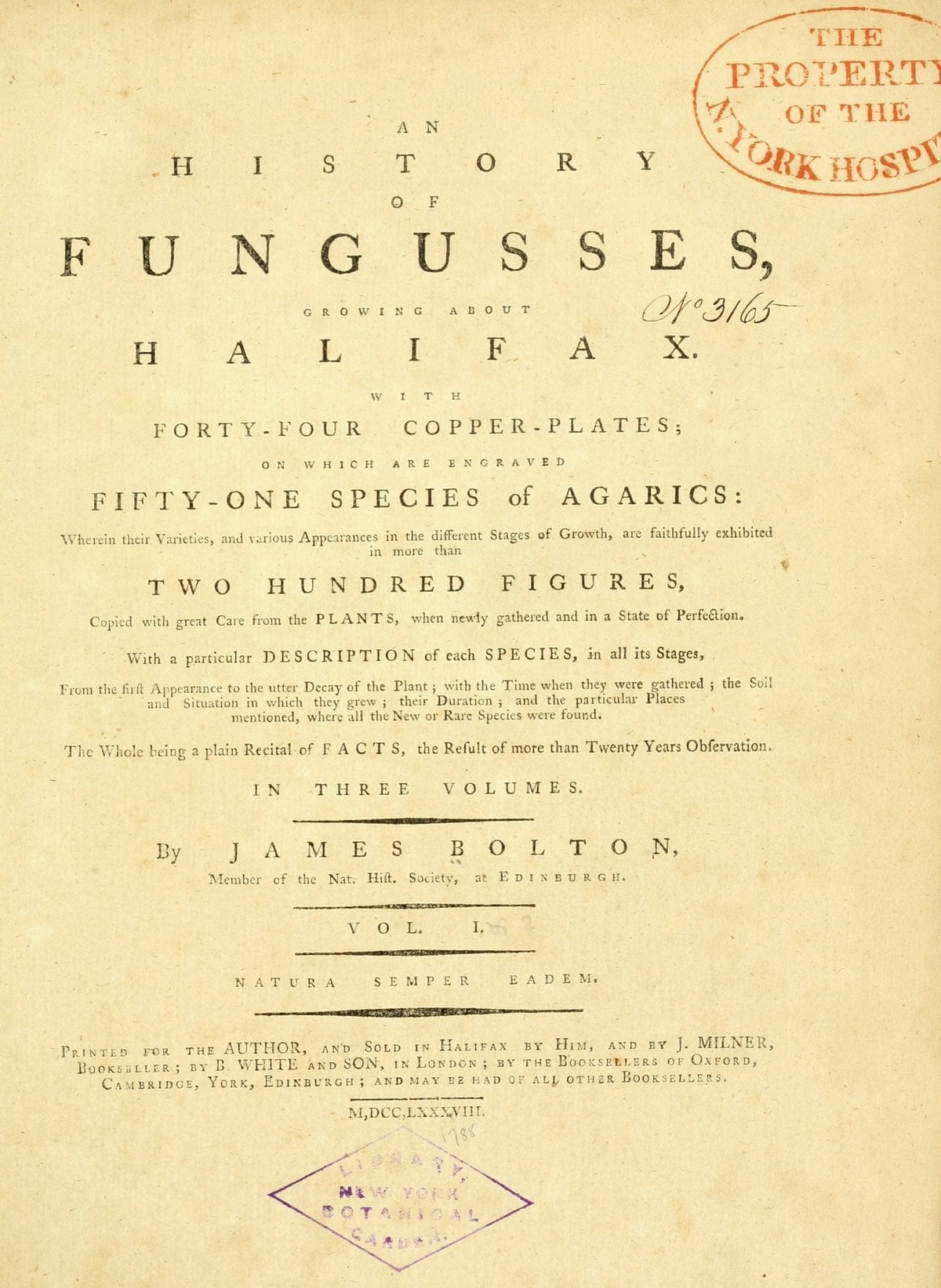
An History of Fungusses, growing about Halifax (Vols 1-2)
James Bolton
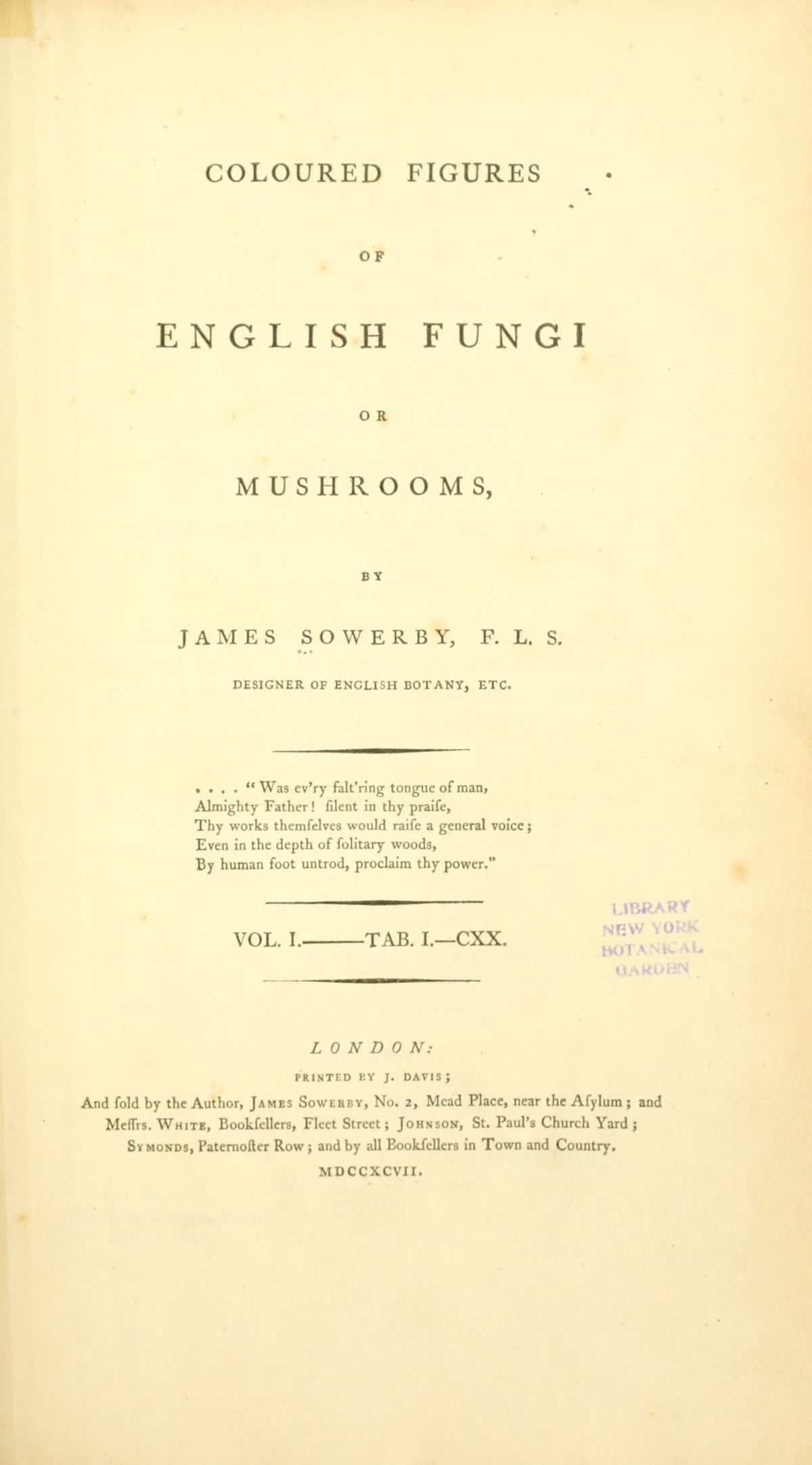
Coloured Figures of English Fungi or Mushrooms
James Sowerby
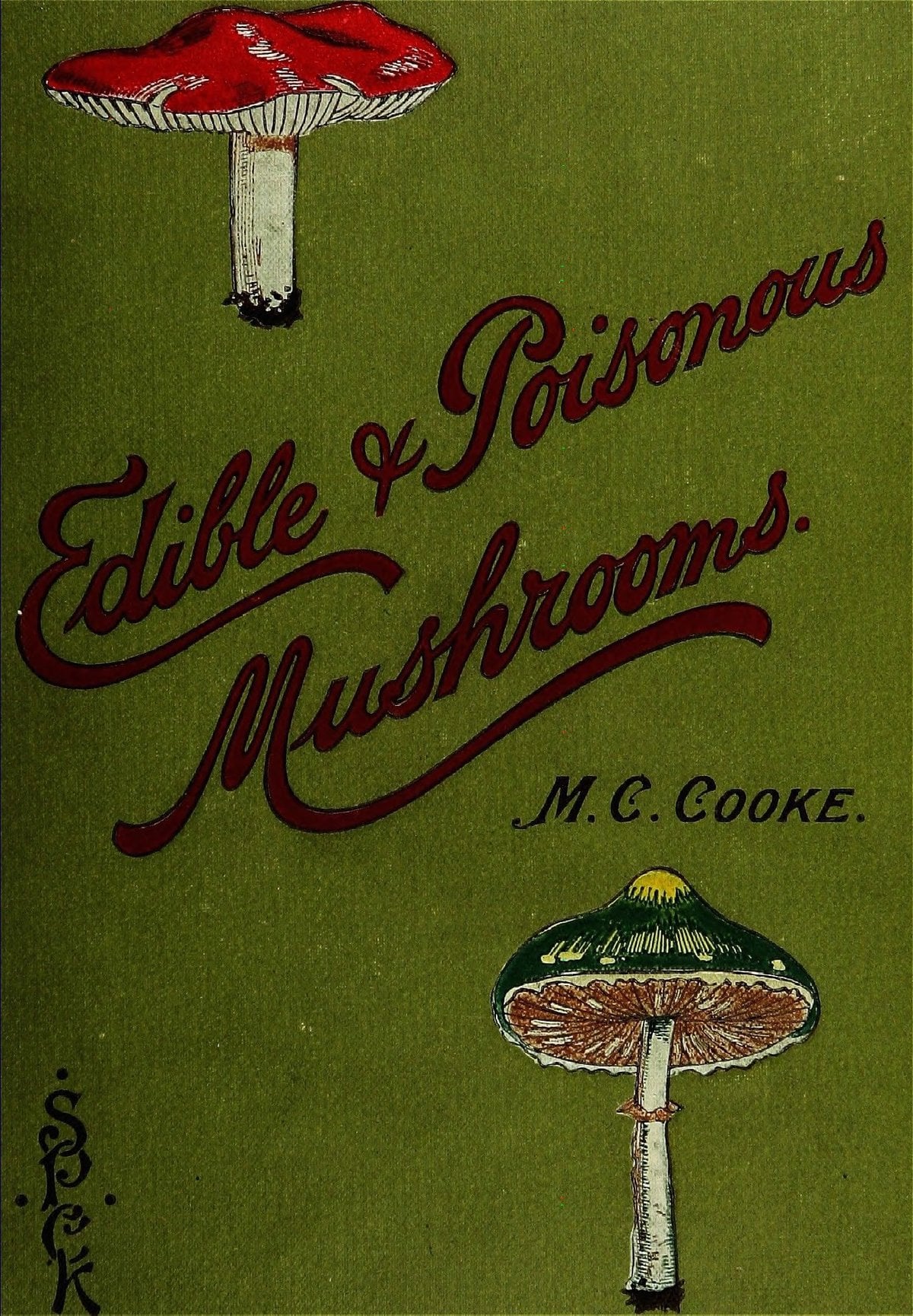
Edible and Poisonous Mushrooms: What to Eat and What to Avoid
Mordecai Cubitt Cooke
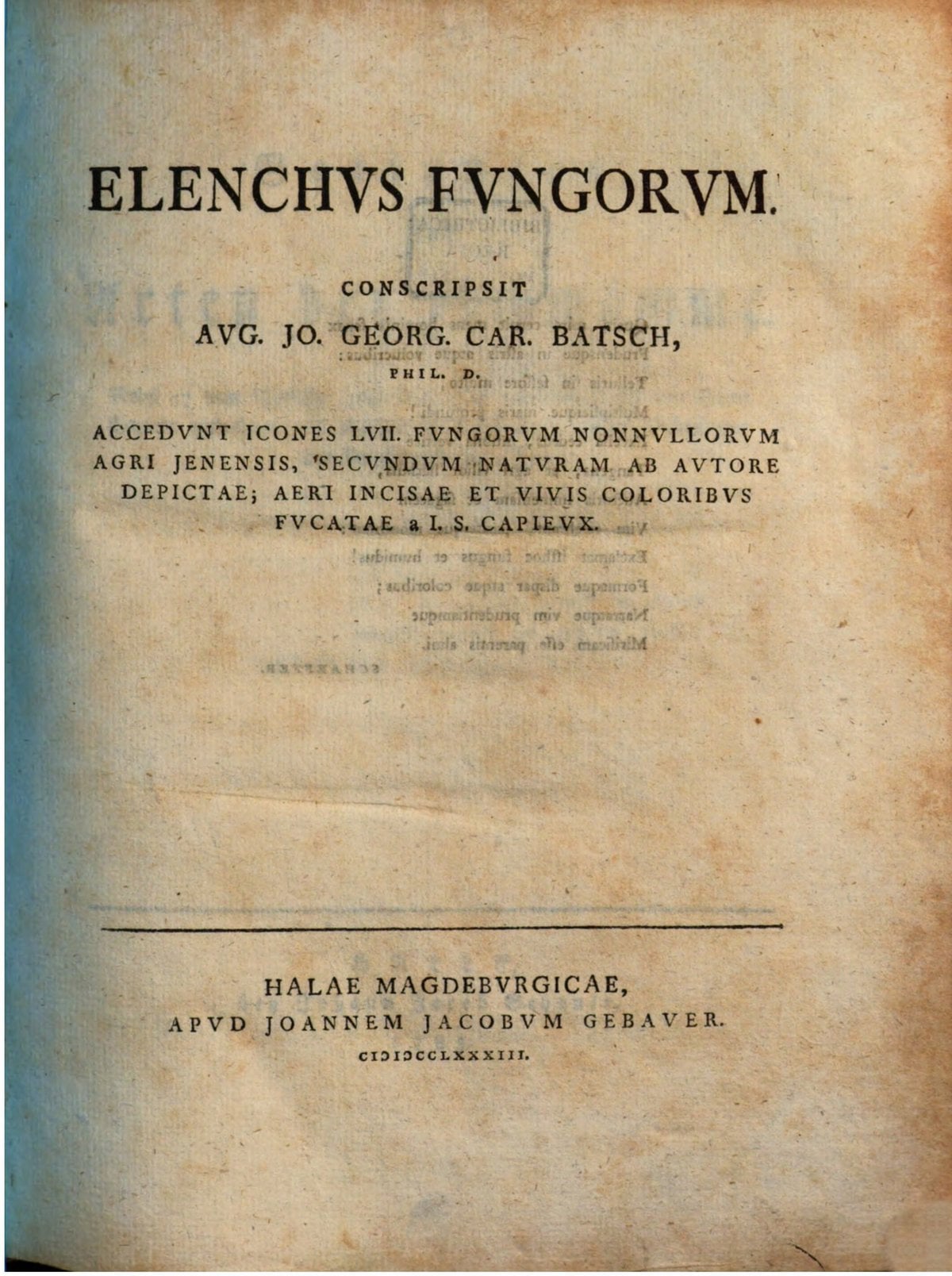
Catalogue of Fungi
August J.G.K. Batsch
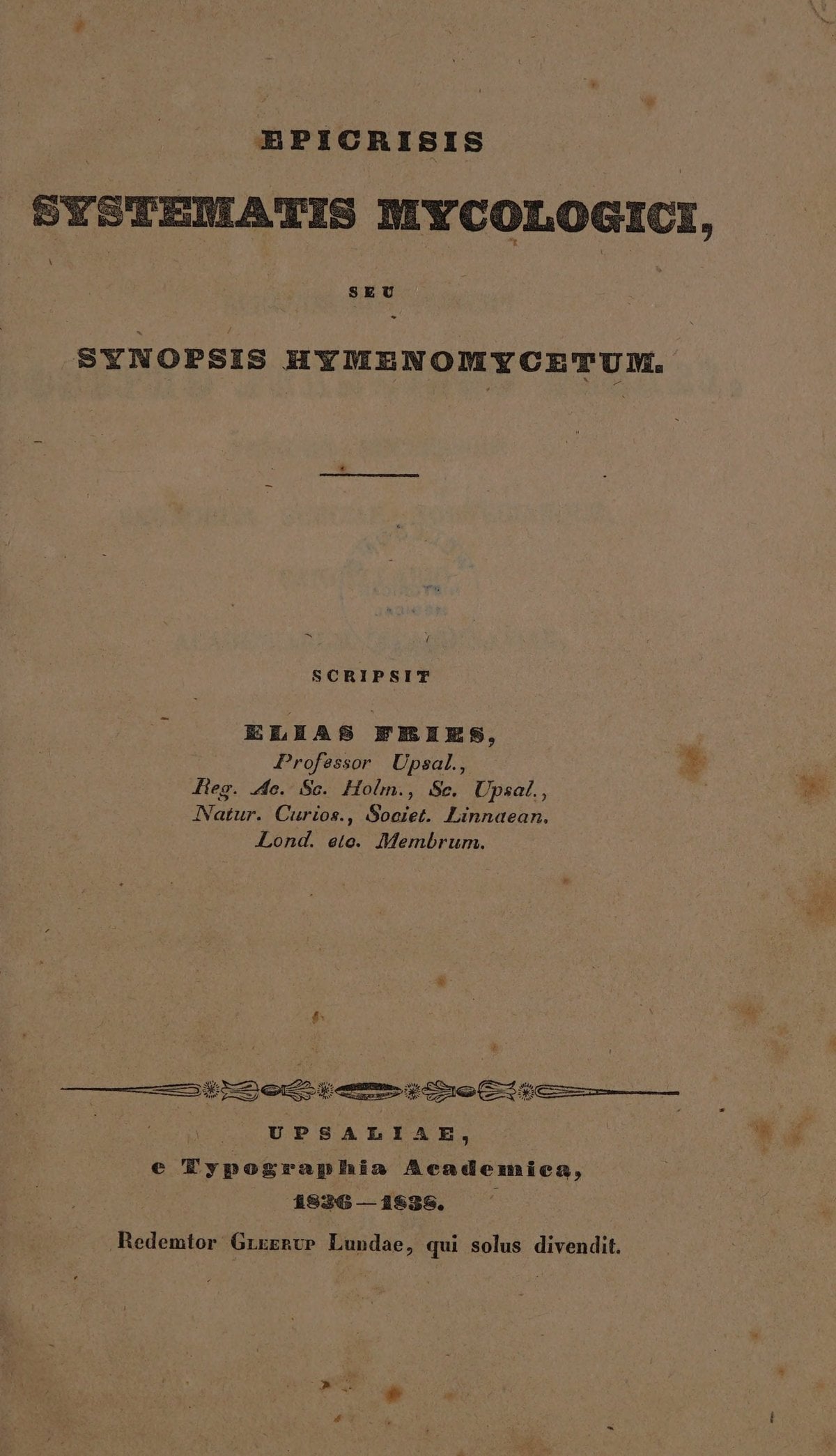
Critical Review of the Mycological System
Elias Magnus Fries
History of the Fungi of the Rimini Territory
Giovanni Antonio Battarra
Illustrations of Fungi which Grow in Bavaria and the Palatinate around Ratisbon
Jacob Christian Schaeffer; C.H. Persoon (ed.)
Histoire des Champignons de la France, Vol 1
Pierre Bulliard
Histoire des Champignons de la France, Vol 2
Pierre Bulliard
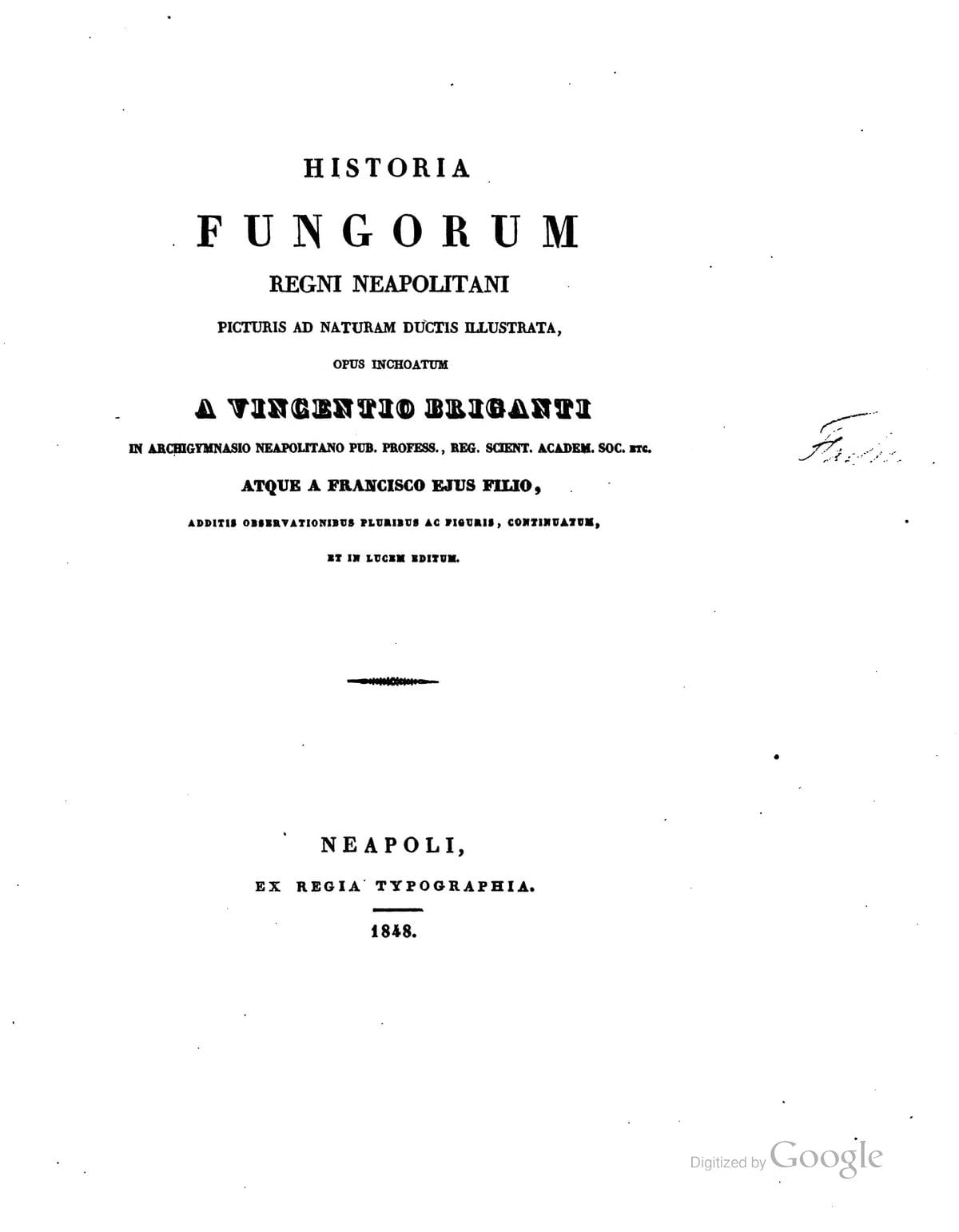
History of the Fungi of the Kingdom of Naples
Vincenzo Briganti
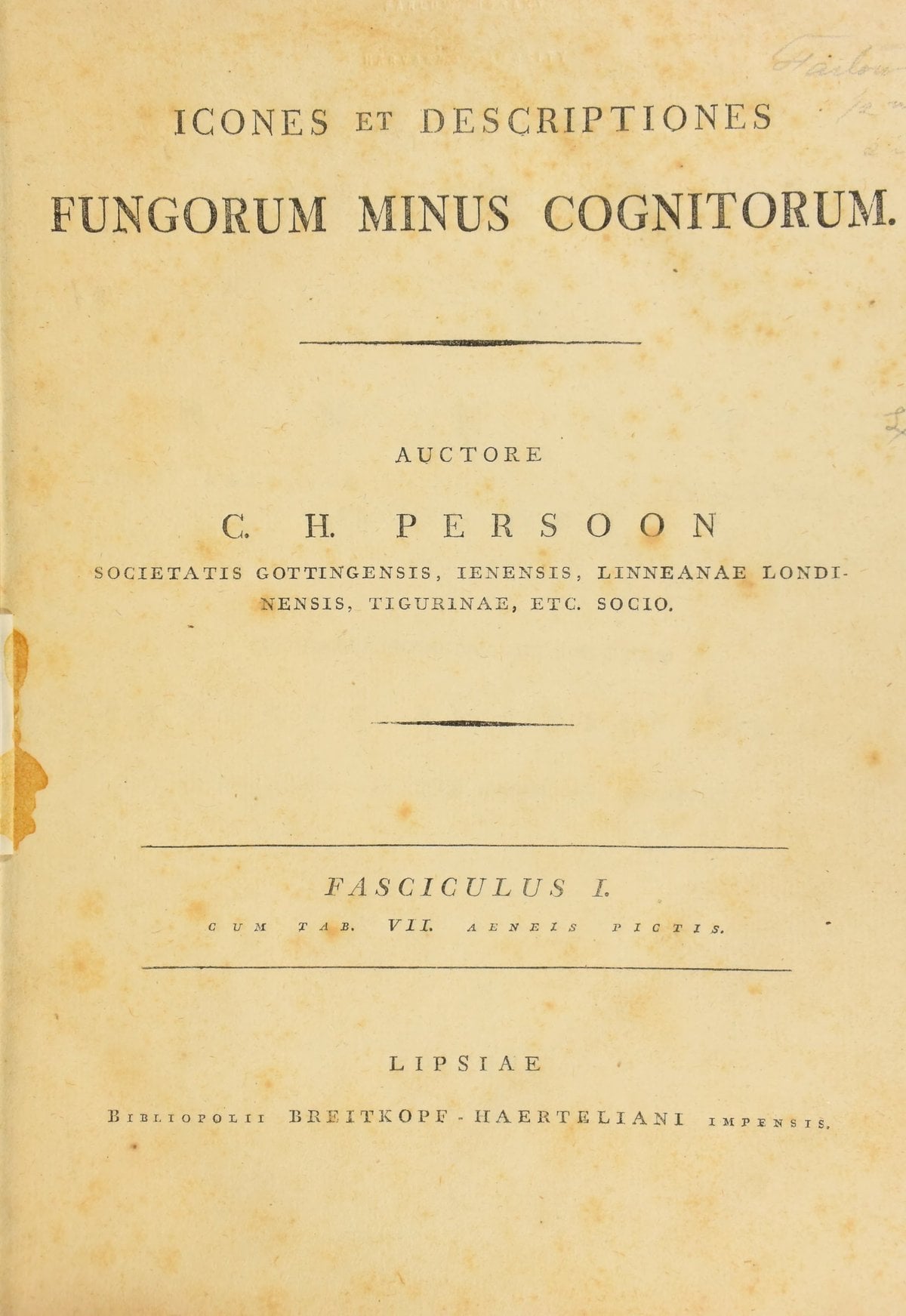
Illustrations and Descriptions of Lesser Known Fungi
Christiaan Hendrik Persoon