


Theosophical & Occult Societies
The Modern Theosophical Movement (1875–1930)
Illustrations
Browse all51 images extracted from 24 books
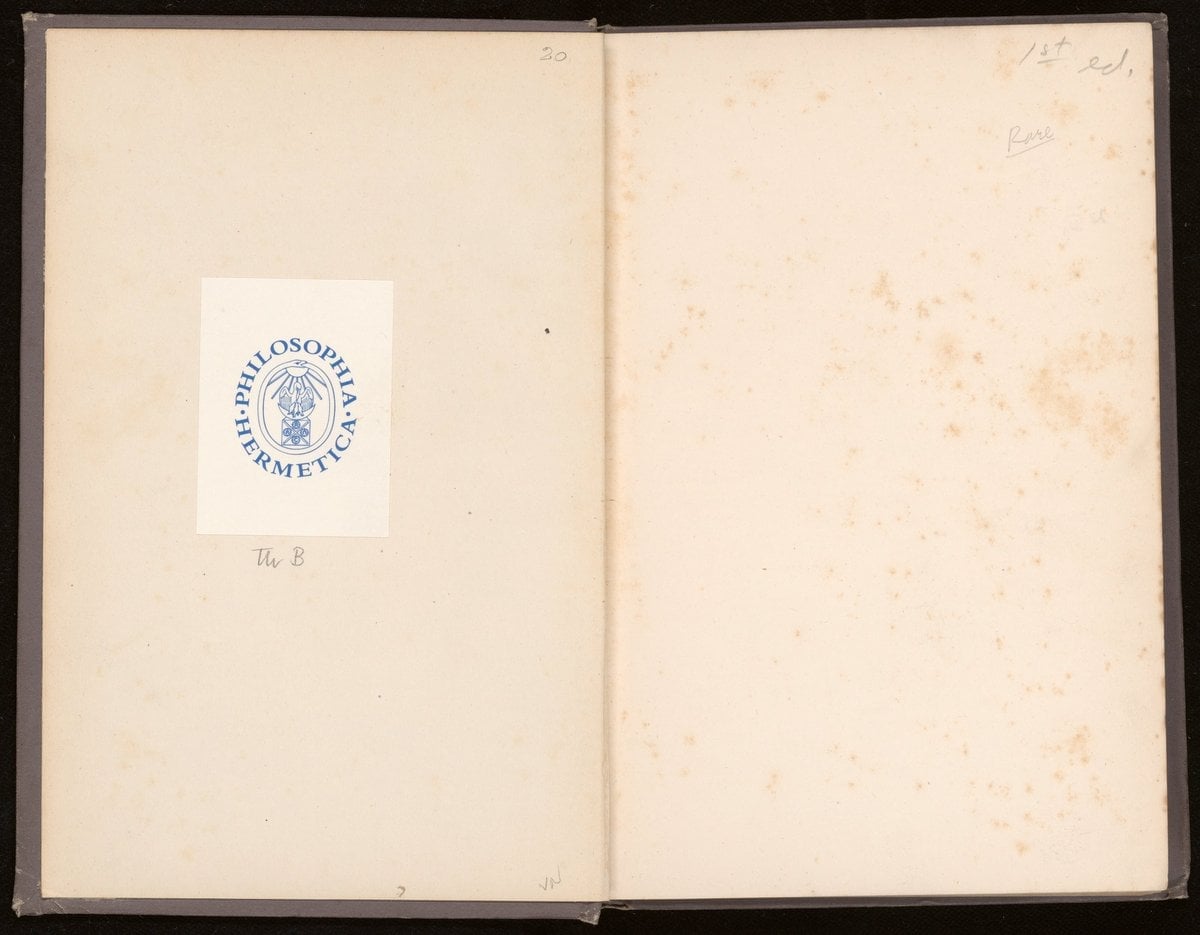
A vibrant alchemical emblem titled 'Philosophia Hermetica,' featuring a pelican in its piety encircled by an ouroboros. This symbolic image represents the transformative processes of alchemy and the eternal cycle of life and death, central themes in hermetic philosophy.
This intricate emblem features a hexagram containing the four living creatures of the Tetramorph—the man, eagle, lion, and bull—surrounding a central human face. The word 'ADONAI,' a Hebrew name for God, is inscribed across the top, signifying the divine nature of this symbolic synthesis. This illustration from H.P. Blavatsky's 'Isis Unveiled' reflects the 19th-century synthesis of Kabbalistic, Gnostic, and Hermetic traditions.
This intricate engraving presents a complex esoteric emblem centered on a hexagram and an inverted triangle. It features a central human countenance flanked by lion heads, surmounted by a crowned eagle, and inscribed with the divine name 'ADONAI'. This illustration from Helena Blavatsky's 'Isis Unveiled' synthesizes various mystical traditions, including Kabbalah and Gnosticism, to represent divine emanations and spiritual hierarchy.
A dramatic scene depicting a group of Arabian magicians renouncing their sorceries before a saintly figure, likely St. Dominic, who holds an open book of scripture. The magicians are shown in various states of emotional distress and prayerful submission, symbolizing the triumph of religious faith over occult practices. In the foreground, two dogs fight, possibly representing the base nature of the magic being cast aside.
This intricate 1736 engraving presents a complex allegory involving theology and mathematics, as indicated by the labeled 'Theologische Canones' (theological canons/cannons). The scene depicts various figures engaged in a symbolic struggle or discourse, with Latin and German inscriptions providing a moral and intellectual framework for the book's narrative. It serves as a visual representation of Johann Friedrich Bachstrom's polemical and philosophical themes regarding his own 'supposed death'.
This intricate frontispiece engraving, titled 'Die Wiedergeburt' (The Rebirth), serves as a visual summary of Jacob Boehme's theosophical teachings. The upper portion represents the divine light and the seven spirits of God, symbolized by eyes, while the lower dark sphere depicts the seven root sins of the fallen human nature. The central dove and heart symbolize the process of spiritual transformation and the descent of the Holy Spirit into the soul.

This intricate frontispiece from 1618 serves as a visual gateway to the 'Speculum Sophicum Rhodo-Stauroticum,' a key Rosicrucian text. It depicts the harmonious relationship between 'Physiologia' (the study of nature) and 'Theologia' (the study of the divine), framed by a wealth of alchemical and hermetic symbols that represent the seeker's journey toward enlightenment. The detailed engraving exemplifies the complex visual language used by early modern secret societies to convey their philosophical and spiritual doctrines.

This intricate woodcut, reproduced from the 1493 'Liber Chronicorum' (Nuremberg Chronicle), depicts the apocalyptic 'Reign of Antichrist.' The scene shows the Antichrist preaching to a diverse crowd while being prompted by a demon, as divine retribution looms above in the form of an angel with a sword. It serves as a powerful example of late medieval eschatological imagery and the masterful printmaking of Michael Wolgemut's workshop.

This illustration from Claude Fayette Bragdon's seminal work 'Projective Ornament' (1915) showcases lanterns decorated with patterns derived from the geometry of higher dimensions. Bragdon believed that a new architectural and decorative language could be found in the mathematical laws of the universe, specifically through the projection of four-dimensional forms into two and three dimensions. The bold, graphic style reflects a synthesis of mathematical precision and aesthetic modernism.
Founded in a New York apartment in 1875 by Helena Petrovna Blavatsky and Colonel Henry Steel Olcott, the Theosophical Society became one of the most influential spiritual movements of the modern era. Blavatsky's Isis Unveiled and The Secret Doctrine synthesized Hindu, Buddhist, Neoplatonic, and Hermetic thought into a vast cosmological system that claimed to recover the ancient wisdom underlying all religions. The movement drew scientists, artists, and social reformers into its orbit, establishing centers from Adyar to Point Loma and publishing a torrent of books, journals, and pamphlets that reshaped Western engagement with Eastern philosophy.
The Society's impact extended far beyond religion. Annie Besant and C. W. Leadbeater's illustrated clairvoyant investigations — mapping thought-forms as colored geometries, charting the human aura and the chakras — directly inspired the birth of abstract art. Kandinsky read Thought-Forms and painted the first non-representational canvases. Bragdon projected fourth-dimensional Theosophical geometry into architectural ornament. The movement's California chapter, centered at Point Loma under Katherine Tingley, created a utopian community that merged education, theater, and printing. This collection gathers the primary sources of that movement: the foundational texts, the illustrated esoteric investigations, and the publications of the California Theosophists who carried the tradition into the twentieth century.
Essential Reading
The foundational texts of this tradition

Isis Unveiled: A Master-Key to the Mysteries of Ancient and Modern Science and Theology
Helena Blavatsky, 1877
Blavatsky's first major work (1877), a sprawling attack on scientific materialism and religious dogma that drew on Hermetic, Kabbalistic, and Hindu sources to argue for a universal ancient wisdom tradition.
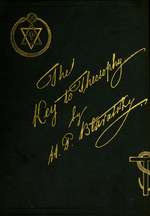
The Key to Theosophy
Helena Blavatsky, 1889
Written in dialogue form, the Key (1889) is Blavatsky's most accessible exposition of Theosophical principles — karma, reincarnation, the sevenfold constitution of man, and the Society's three objects.
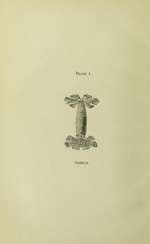
Occult Chemistry: Clairvoyant Observations on the Chemical Elements
Annie Besant and C.W. Leadbeater, 1919
Besant and Leadbeater claimed to observe chemical elements clairvoyantly, producing detailed diagrams of atomic structure that eerily prefigured some aspects of particle physics. A landmark of illustrated esoteric science.
Important Works
Significant texts that deepen understanding
Theosophical Glossary
H.P. Blavatsky, 1906
Blavatsky's posthumous glossary (1892) defines hundreds of terms from Sanskrit, Tibetan, Kabbalistic, and Hermetic traditions — an essential reference for reading her major works.
Death--and After?
Annie Besant, 1893
Besant's compact treatise on the Theosophical understanding of death, the afterlife, and the journey through kama-loka and devachan.
The chakras. A monograph
Leadbeater, Charles Webster, 1927
Leadbeater's illustrated monograph (1927) on the chakra system, with color plates that became the standard Western visualization of the energy centers.
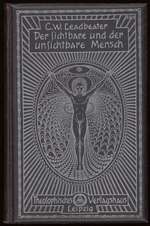
Der sichtbare und der unsichtbare Mensch. Darstellung verschiedener Menschentypen, wie der geschulte Hellseher sie wahrnimmt
Leadbeater, Charles Webster, 1908
Leadbeater's visual guide to the human aura and subtle bodies, with color plates showing different types of people as seen by trained clairvoyance. German edition.

An Introduction to Yoga
Annie Besant, 1908
Besant's lectures (1908) on the practice and philosophy of yoga from a Theosophical perspective, bridging Hindu tradition with Western esoteric psychology.
From the caves and jungles of Hindostan
Blavatsky, H.P., 1892
Blavatsky's travel writing from India — vivid accounts of yogis, fakirs, and temple mysteries, serialized in Russian newspapers before her Theosophical fame.
Also Notable
Secret Doctrine Vol. III - Esoterica
H.P. Blavatsky, 1897
The stanzas of Dzyan (From The Secret Doctrine)
Unknown, 1892
Transactions of the Blavatsky Lodge of the Theosophical Society. Discussions on the stanzas of the first volume of The secret doctrine
Unknown, 1890
Die uralte Weisheit. Eine kurzgefasste Darstellung der Lehren der Theosophie
Besant, Annie, 1780
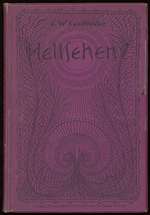
Hellsehen (Clairvoyance)
Leadbeater, Charles Webster, 1910
All Books
Browse Full Catalog→74 books in this collection
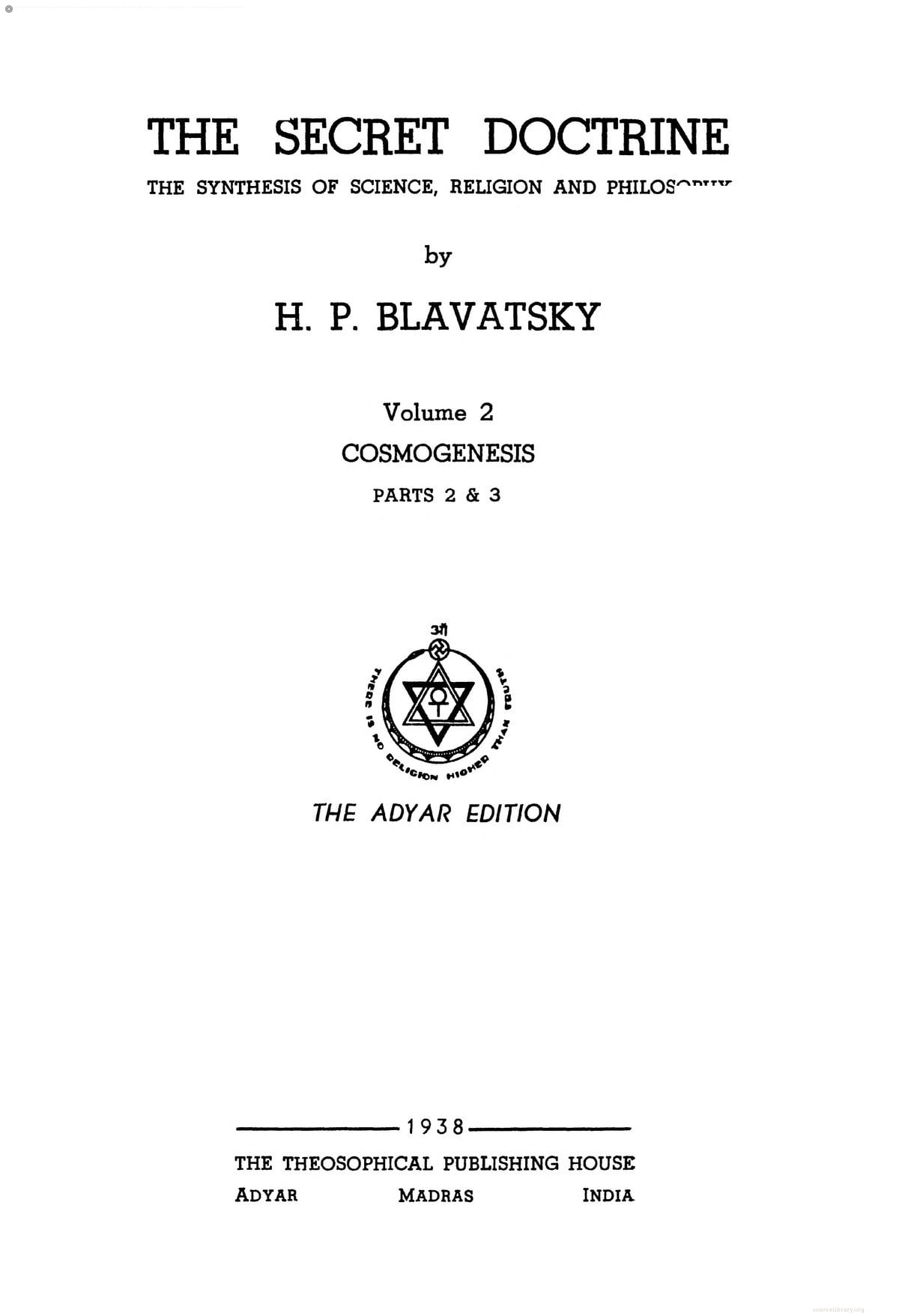
The Secret Doctrine: Synthesis of Science, Religion and Philosophy Vol. 2
Helena Blavatsky

An Introduction to Yoga
Annie Besant
Secret Doctrine Vol. III - Esoterica
H.P. Blavatsky
Death--and After?
Annie Besant
Key to Theosophy
H.P. Blavatsky
The Key to Theosophy
Helena Blavatsky
From the caves and jungles of Hindostan
Blavatsky, H.P.
The Secret Doctrine Vol. II
Helena Petrovna Blavatsky
Theosophical Glossary
H.P. Blavatsky
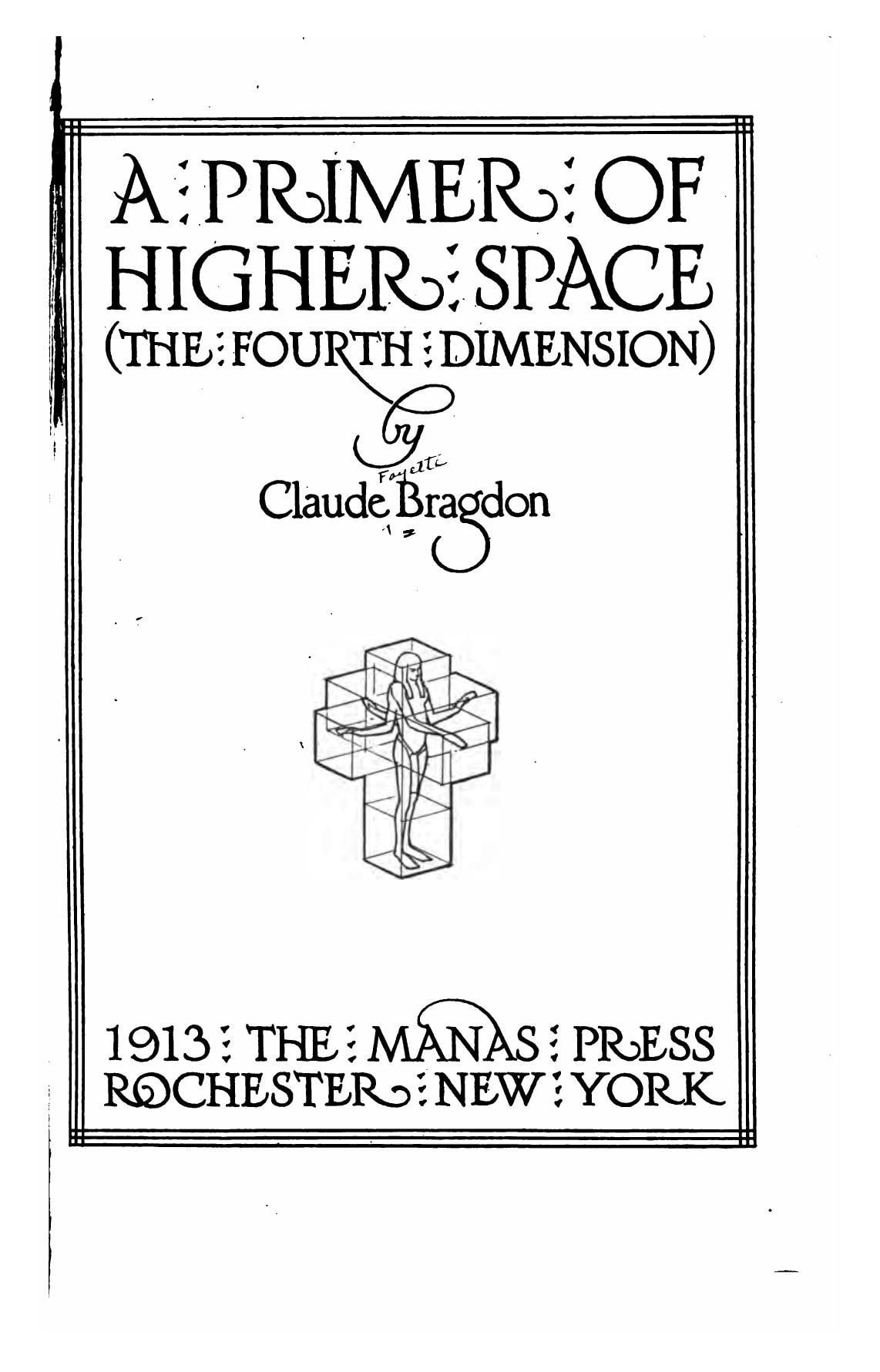
A Primer of Higher Space (The Fourth Dimension)
Claude Fayette Bragdon
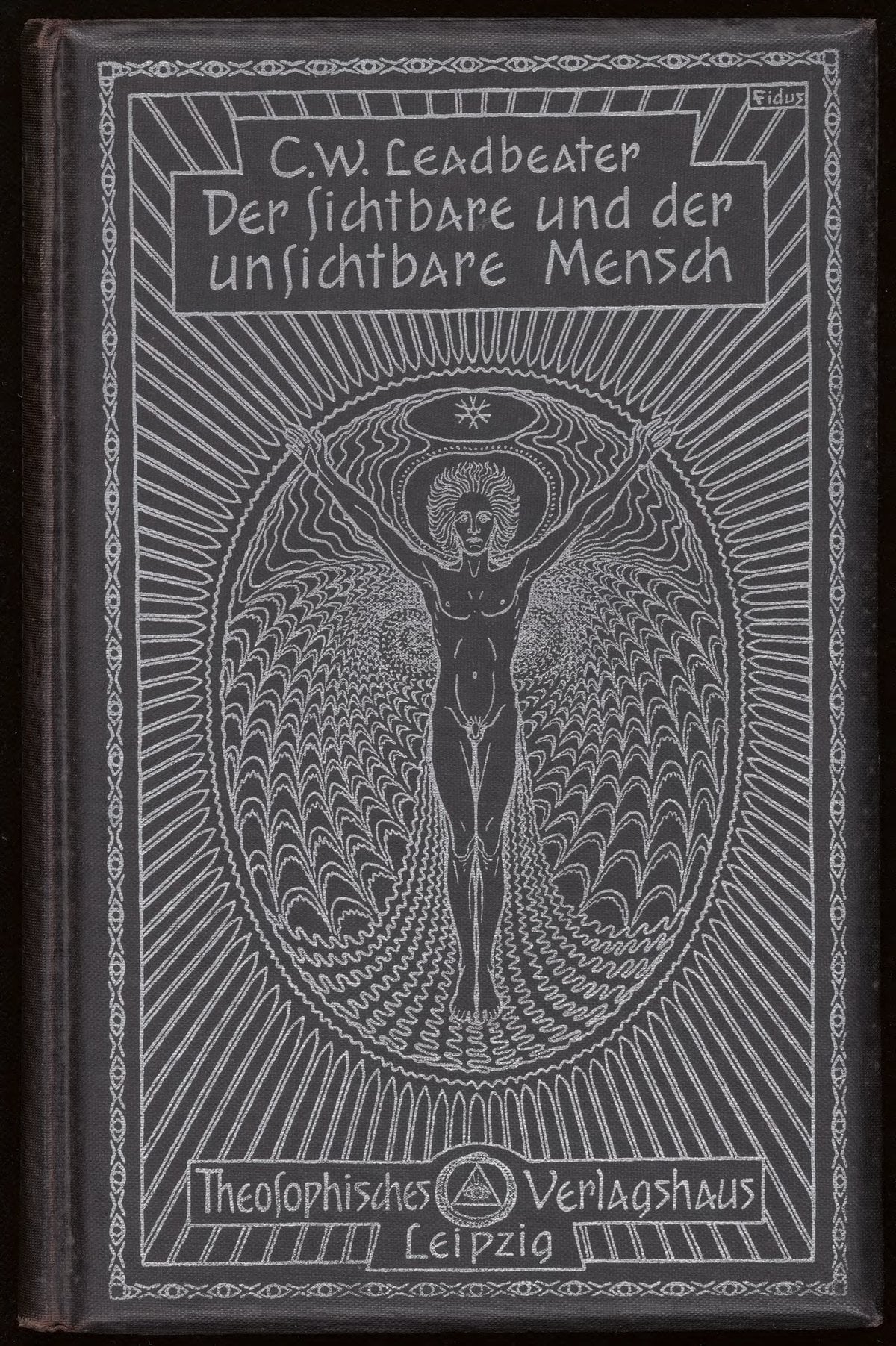
Der sichtbare und der unsichtbare Mensch. Darstellung verschiedener Menschentypen, wie der geschulte Hellseher sie wahrnimmt
Leadbeater, Charles Webster
Die uralte Weisheit. Eine kurzgefasste Darstellung der Lehren der Theosophie
Besant, Annie
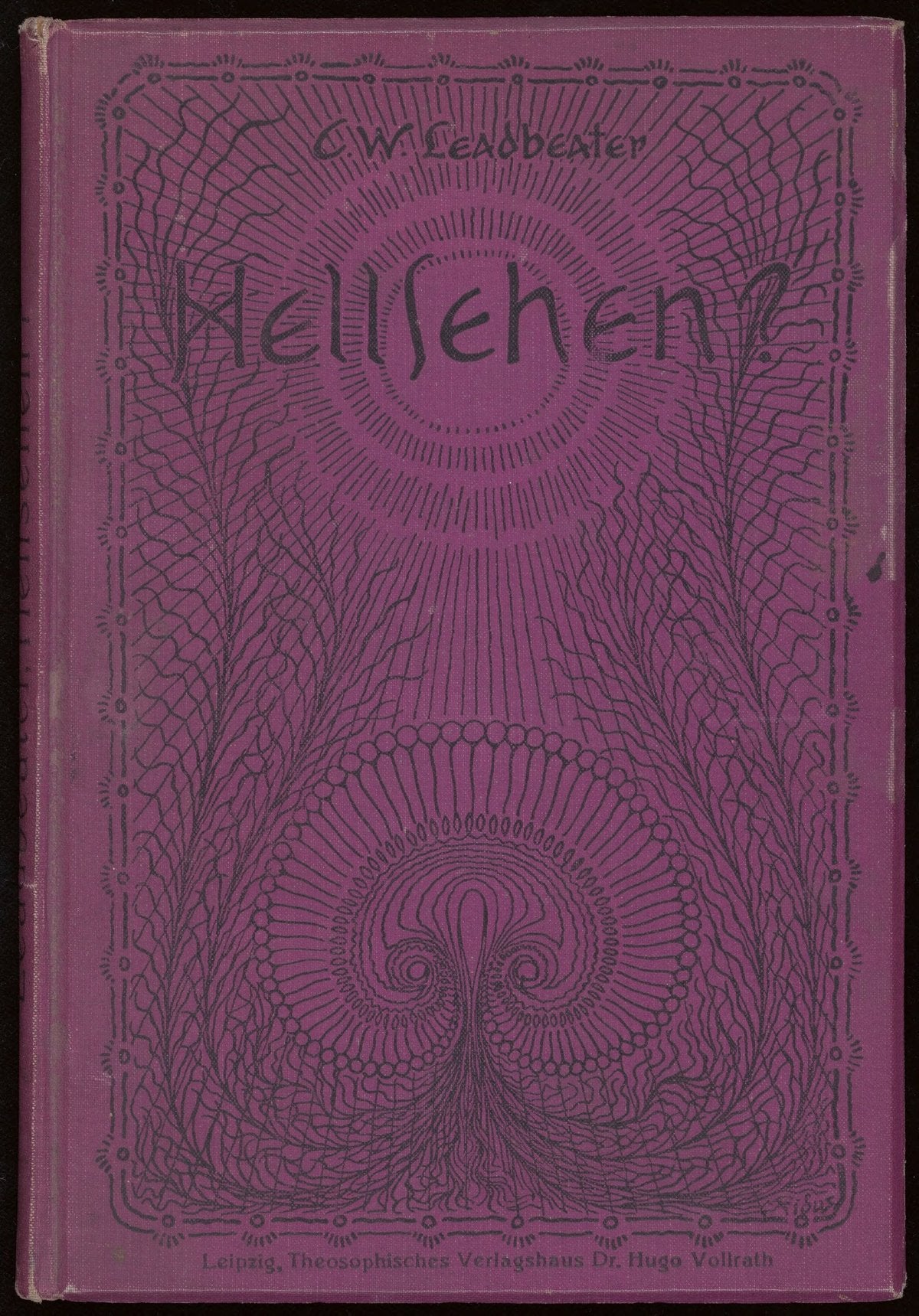
Hellsehen (Clairvoyance)
Leadbeater, Charles Webster
Invisible Helpers
Charles Webster Leadbeater