


Illustrations
Browse all60 images extracted from 16 books
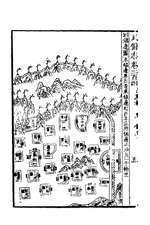
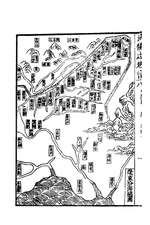
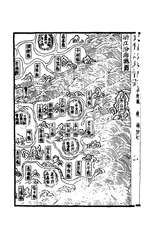
This woodblock print is a map of Quanzhou Prefecture in Fujian province, featured in the 1621 military treatise 'Wubei Zhi' (Treatise on Armament Technology) by Mao Yuanyi. The map depicts the regional landscape with traditional stylistic conventions, highlighting fortified cities like Quanzhou and Huian, as well as significant natural features like mountains and the sea. It serves as a valuable record of late Ming Dynasty geographical knowledge and administrative organization for military and civil purposes.
This woodcut illustration from the 1621 military treatise 'Wubei Zhi' (Treatise on Armament Technology) depicts a soldier in the 'Riding the Dragon Stance' (騎龍勢). He is shown wielding a long-handled trident, a weapon used for both thrusting and parrying. These illustrations served as a vital visual manual for training Ming Dynasty troops in standardized combat techniques.
This woodcut from the 1621 military treatise Wubizhi illustrates large infantry shields, often called 'tiger shields' due to the fierce animal faces painted on them to intimidate enemies. The scene also depicts spears and banners, providing a glimpse into the tactical equipment and visual psychological warfare of the Ming Dynasty military.
This woodcut from the 1621 military treatise Wubizhi depicts a specialized war wagon equipped with multiple shields and spears. The shields are decorated with fierce, monstrous faces intended to intimidate the enemy, while soldiers are shown actively maneuvering the device on the battlefield. This illustration provides valuable insight into the sophisticated siege and defensive weaponry developed during the Ming Dynasty.
This woodcut from the 'Wubizhi' (Treatise on Armament Technology) depicts a 'Dafu Ship,' a primary class of warship used by the Ming dynasty navy. The illustration meticulously details the ship's structure, including its multiple masts, crow's nests for archers, and a deck crowded with soldiers armed with spears, shields, and bows. It provides a rare visual record of the sophisticated naval capabilities and military organization of 17th-century China.
This woodcut from the 1621 military treatise Wubei Zhi depicts two practitioners engaged in sword training. It illustrates specific stances and techniques used in Ming dynasty martial arts, serving as both a practical manual and a historical record of military preparation.

This woodcut from the 1621 military treatise 'Wubei Zhi' (Treatise on Armament Technology) depicts a specific staff-fighting posture known as 'Qun Lan Shi' (Group Blocking Stance). The illustration serves as a practical instructional guide, demonstrating the precise body alignment and weapon positioning used in Ming Dynasty military training.

This woodcut from the 1621 military compendium Wubei Zhi (Treatise on Armament Technology) illustrates a specific staff-fighting technique known as the 'Village House Random Wood-Chopping Stance'. The figure is depicted in a dynamic pose, demonstrating the precise body mechanics and weapon positioning essential for Ming-era combat training. Such illustrations served as vital instructional tools for standardizing military techniques across the empire.

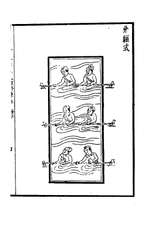
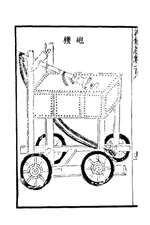
This woodcut from the 1621 military treatise Wubei Zhi (Treatise on Armament Technology) depicts a sophisticated siege engine or armored carriage. The illustration shows soldiers stationed within the protective structure, highlighting the advanced military engineering and tactical planning of the Ming dynasty.
All Books
Browse Full Catalog→105 books in this collection
Treatise on Armament Technology: Logistics for River Crossings
茅元儀
Treatise on Military Preparedness
茅元儀
Treatise on Military Preparations, Volume 45
茅元儀
Treatise on Armament Technology: Military Logistics and Provisions
茅元儀
Treatise on Armament Technology, Volume 42
茅元儀
Treatise on Armament Technology
茅元儀
Treatise on Armament Technology: Military Divination
茅元儀
Treatise on Military Preparedness, Volume 14
茅元儀
Treatise on Military Preparedness, Volume 90
茅元儀
Treatise on Armament Technology: Coastal Defense of Liaodong
茅元儀
Treatise on Military Preparation: Coastal Defense of Zhejiang
茅元儀
Treatise on Armament Technology, Volume 27
茅元儀
Treatise on Armament Technology (Volume 69)
茅元儀
Treatise on Armament Technology: Divination of Wind and Rain
茅元儀